- The short answer
- Weather in India in March - at a glance
- Early and late March feel like two different months
- Where to go in March - region by region
- Holi and other festivals in March
- Prices and crowds in March
- What to pack for March
- Our tours for late winter and spring 2027
- Sources
- Frequently asked questions
India in March is a good choice if you are heading for the north: Delhi, Agra and the Taj Mahal, Rajasthan and Varanasi. It is dry and sunny, usually around 30°C during the day, and the nights are mild. There is just one thing to know: March is a month of transition. The first days still feel like a gentle February, while by the end of the month the plains are moving into the Indian summer.
Below: March weather region by region, Holi, Ranthambore and a simple table of where to go. For the whole year, see our guide to the best time to visit India.
The short answer
- Delhi, Agra, Jaipur, Varanasi: yes. On average 30-33°C by day and 14-17°C at night, with almost no rain.
- The first half of March is more comfortable than the second. It gets hotter every week.
- Goa and the south: yes, but this is the hot tail end of the beach season.
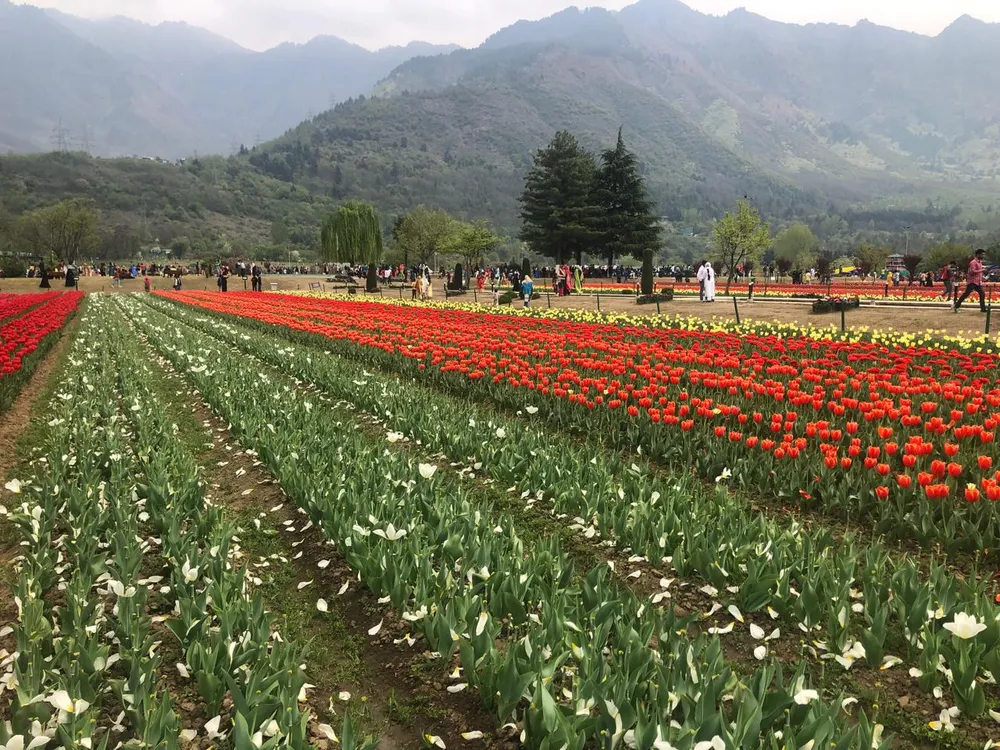
- Kashmir: still cool and wet, but towards the end of the month tulip season begins: in 2026, after an unusually warm February, the Srinagar tulip garden opened early, on 16 March.
- Ladakh and the high Himalaya: no. In Leh it is still winter.
Weather in India in March - at a glance
| Region | March weather (day / night) | Go? |
|---|---|---|
| Delhi | approx. 30°C / 16°C, dry | yes |
| Agra (Taj Mahal) | approx. 32°C / 14°C, dry | yes, cool dawns |
| Jaipur (Rajasthan) | approx. 32°C / 17°C, almost no rain | yes, best in the first half |
| Khajuraho | approx. 34°C / 16°C, dry | yes, sightseeing in the morning |
| Varanasi | approx. 33°C / 17°C, dry | yes |
| Goa (Panaji) | approx. 33°C / 23°C, no rain | yes, hot and humid |
| Srinagar (Kashmir) | approx. 15°C / 4°C, over 100 mm of rain | better in the second half, for the tulips |
| Leh (Ladakh) | approx. 10°C / -4°C | not for sightseeing |
Long-term March averages from the India Meteorological Department (IMD) 1991-2020 normals, 1951-2020 for Leh, rounded. These are averages for the whole month: the first days of March tend to be cooler, the last days warmer.
Early and late March feel like two different months
The numbers show it best. In Delhi the average daytime high is about 24°C in February, about 30°C in March and already about 36-37°C in April. Agra, Jaipur and Varanasi follow the same pattern: from about 26-27°C in February to 37-39°C in April. March sits right in the middle of that jump.
Spring in Delhi ends in the second half of March, when daytime temperatures pass 30°C. In the first half of the month you can still sightsee at midday; by late March the mornings and late afternoons are the pleasant part of the day. If you do not cope well with heat, aim for the first two weeks. The expected departure of our Pearls of North India tour, 10 March, falls in exactly that cooler part of the month.
Where to go in March - region by region
Delhi
About 30°C by day and 16°C at night, with rain on fewer than two days in the month on average. Good weather for Old Delhi on foot. See our guide Delhi - what to see.
Agra and the Taj Mahal in March
In Agra the average daytime high is about 32°C, but nights drop to about 14°C, so bring a light jumper for dawn at the Taj Mahal. Dawn is the best time anyway: the Taj Mahal opens 30 minutes before sunrise, and by the afternoon in March the marble terrace gets hot. Remember that the Taj Mahal is closed on Fridays. More on tickets and gates: Taj Mahal - a visiting guide.
Rajasthan in March: Jaipur, Pushkar and the desert
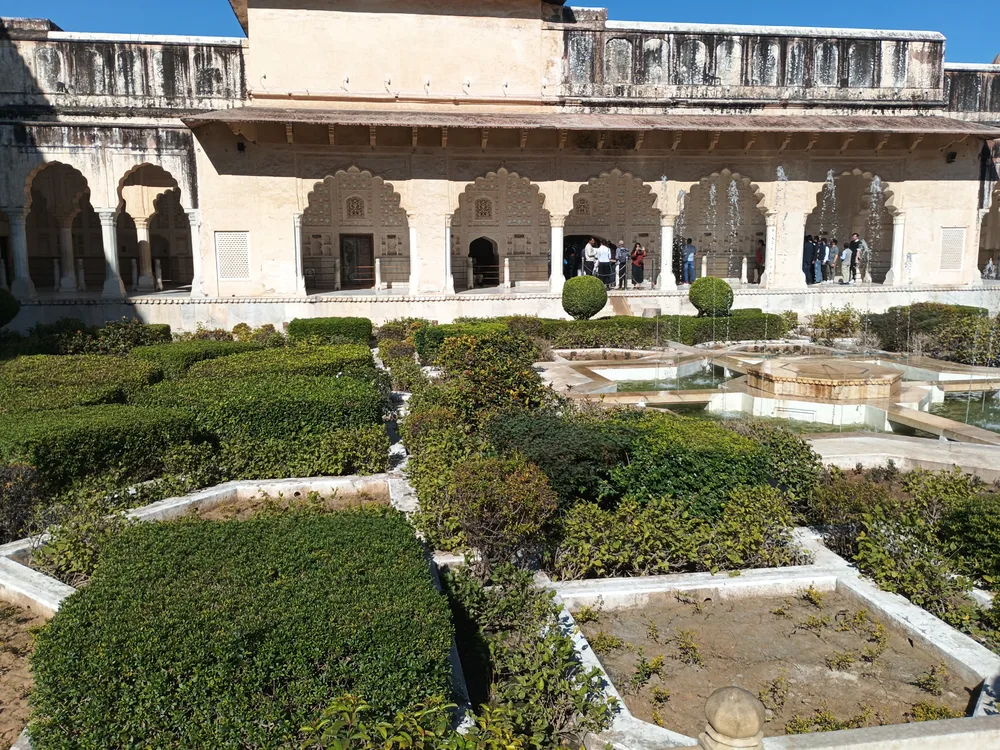
Jaipur averages about 32°C by day and 17°C at night in March, and it rains on less than one day in the month on average. The forts are comfortable to visit, especially in the morning: Amer Fort is best before noon, before the stone courtyards heat up. City by city, Rajasthan is covered in our guide Rajasthan - what to see, and the Pink City itself in Jaipur - what to see.
Ranthambore - tigers in March
Ranthambore National Park is open in March: the main part of the park runs from 1 October to 30 June and closes for the monsoon. From February to the end of March, safaris run roughly from 6:30 to 10:00 and from 14:30 to 18:00, but the schedule changes with the season and the zone, so check the exact times when booking the safari. A morning in an open jeep is warmer in March than in winter, when the start can be genuinely cold. Nobody can guarantee a tiger, but two drives instead of one clearly improve your chances. Details: Ranthambore tiger safari.
North India in March with a tour leader: Pearls of North India is 12 days through Delhi, Jaipur, Agra with the Taj Mahal at sunrise, Orchha, Khajuraho and Varanasi. Expected departure: 10 March 2027, in the cooler half of the month. From €900 (3★) or €1,150 (4★).
Send me the itineraryVaranasi and Khajuraho
Varanasi averages about 33°C by day and 17°C at night in March. The dawn boat ride on the Ganges and the evening Ganga Aarti ceremony both take place at a pleasant temperature. Khajuraho is the warmest stop on the classic route, at about 34°C by day on average, so the temples are best seen in the morning. Varanasi is covered in our guide Varanasi - what to see.
Goa and the south
Panaji averages about 33°C by day and 23°C at night, with practically no rain in March but noticeable humidity. It is still beach season, just a hot one. If you are combining the coast with a trip to Agra or Hampi, see our guide to side trips from Goa.
Kashmir, Ladakh and the Himalaya
In Srinagar, March is cool and wet: about 15°C by day and 4°C at night on average, with more than 100 mm of rain and around 7 rainy days. There is one good reason to go, though: the tulip garden. In 2026 it opened to visitors on 16 March, earlier than usual, and the date depends each year on when the tulips bloom. Ladakh is still in winter, with freezing nights in Leh. Our Kashmir and Ladakh tours run in June, July and September; see also Kashmir - when to go.
Holi and other festivals in March
According to most Hindu calendars, Holi in 2027 falls on Monday 22 March, with the Holika Dahan bonfires on the evening of 21 March. The Indian government's official holiday list, however, gives Holi as 23 March. On the morning of Holi many shops and restaurants are closed. How and where to celebrate is covered in our guide to Diwali and Holi.
To be honest: Pearls of North India ends before Holi, around 21 March, and we do not promise that any of our spring tours will include Holi. If it matters to you, ask before you book. The government holiday list for 2027 also includes Id-ul-Fitr, the festival that ends Ramadan, on 10 March (provisional, as it depends on the sighting of the moon).
Prices and crowds in March
March is the end of the season in northern India. The peak comes in December, around Christmas and New Year. In our guide to the seasons we note that February and the first half of March offer the best balance of price and conditions. Just watch the dates of major festivals: hotels in the places where they are celebrated most exuberantly get more expensive and fill up quickly. Full costs: how much does a trip to India cost.
What to pack for March
- Light, breathable clothes in cotton or linen, with long sleeves and long legs: they protect you from the sun and work for temples.
- A light jumper or fleece for dawn at the Taj Mahal, early safaris and air-conditioned trains.
- A hat, sunglasses and sunscreen: the March sun is already strong.
- Shoes that slip off easily, and socks: temple marble burns at midday.
- For Kashmir: a rain jacket and a warm layer.
The full list is in our guide what to pack for India.
Our tours for late winter and spring 2027
For February and March 2027 we have three tours of northern India. Pearls of North India is 12 days: Delhi, Jaipur, Agra, Orchha, Khajuraho and Varanasi, with an expected departure on 10 March 2027. Colourful India (15 days, from €1,550) adds Pushkar and two safaris in Ranthambore. Golden Cities of Rajasthan (16 days, from €1,825) takes you through Mandawa, Bikaner, Jaisalmer with a night in the Thar Desert, and Jodhpur. Both are scheduled for February / March 2027, and we confirm the exact dates by phone. The English-speaking tour leader travels with the group in person when there are at least 10 participants, and the tours are run on the ground by the Indian tour operator Abyss Tours. Compare them all: which trip to India.
Sources
- Climate of Delhi (Wikipedia, IMD 1991-2020 normals for Safdarjung) - February, March and April temperatures, end of spring in late March
- Climate of Agra (Wikipedia, IMD 1991-2020 normals) - temperatures in Agra
- Jaipur (Wikipedia, IMD 1991-2020 normals) - temperatures and rainfall in Jaipur
- Varanasi (Wikipedia, IMD 1991-2020 normals) - temperatures in Varanasi
- Khajuraho (Wikipedia, IMD 1991-2020 normals) - temperatures in Khajuraho
- Panaji (Wikipedia, IMD 1991-2020 normals) - temperatures, rainfall and humidity in Goa
- Srinagar (Wikipedia, IMD 1991-2020 normals) - temperatures and rainfall in Srinagar
- Leh (Wikipedia, 1951-2020 normals) - temperatures in Leh
- The Kashmir Monitor - Srinagar tulip garden opening on 16 March 2026
- Taj Mahal (official website) - opening hours, closed on Fridays
- Ranthambhorenationalpark.in (private website) - park season and safari times in February and March
- Drik Panchang - Holika Dahan and Holi 2027 for New Delhi
- Government of India holiday list for 2027 - Holi on 23 March, Id-ul-Fitr on 10 March
Frequently asked questions
Is March a good time to visit India?
Yes, for the north: Delhi, Agra, Rajasthan and Varanasi. It is dry, about 30-33°C by day and 14-17°C at night on average. The first half of the month is more comfortable, because the heat builds towards the end of March.
What is the weather like in India in March?
On the northern plains it is warm and dry, around 30°C by day. Goa is about 33°C and humid, Kashmir is cool and wet at around 15°C, and Ladakh is still in winter with freezing nights.
Is India too hot in March?
For most people, no, especially in the first half of the month. By late March daytime temperatures in Delhi and Rajasthan pass 30°C, so sightseeing happens mainly in the morning and late afternoon.
Is Ranthambore open in March?
Yes. The main part of the park is open from 1 October to 30 June, and in March safaris run in the morning and the afternoon. It closes only for the monsoon, from July to September.
Is Holi in March?
Yes, in 2027 Holi falls towards the end of March. On the morning of the festival many shops and restaurants are closed, so plan around it. The dates and customs are covered in our separate guide to Diwali and Holi.
Can you visit Kashmir in March?
You can, but it is cool and often rainy, around 15°C by day on average. The most interesting time is when the tulips bloom (usually from late March; in 2026 the Srinagar tulip garden opened unusually early, on 16 March), while the main Kashmir season runs from May to September.