India has a festival almost every week, but two are known the world over: Diwali, the autumn festival of lights, and Holi, the spring festival of colours. This guide gives the dates for the year ahead, suggests where to celebrate and is honest about what a festival changes on a trip — because it changes quite a lot.
The short answer
Diwali 2026 is on Sunday 8 November; the whole festival runs for about five days from 6 November. Holi 2027 falls, according to most Hindu calendars, on Monday 22 March, with the Holika Dahan bonfires on the evening of 21 March. Note: the Indian government's official list of holidays for 2027 gives Holi as 23 March. Festival dates follow the lunar calendar and local almanacs can differ by a day — always check the date for the specific city before booking.
Dates for the year ahead
| Festival | Date | Most colourful in | Effect on travel |
|---|---|---|---|
| Diwali (main day) | 8 Nov 2026; celebrations c. 6–10/11 Nov | Varanasi, Jaipur, Amritsar | Full trains and flights, a public holiday, fireworks and smog in Delhi |
| Pushkar Camel Fair | 17–24 Nov 2026 | Pushkar | Pushkar hotels sell out far in advance |
| Dev Deepawali | 24 Nov 2026 | Varanasi | Crowded ghats; boats booked ahead |
| Desert Festival | 18–20 Feb 2027 | Jaisalmer | More visitors, higher prices at desert camps |
| Holika Dahan and Holi | 21 and 22 Mar 2027 (some calendars: 22 and 23 Mar) | Mathura and Vrindavan, Jaipur, Varanasi | On Holi morning many shops and restaurants are closed |
Dates for Diwali, Dev Deepawali and Holi from Drik Panchang (New Delhi) and the Indian government's holiday lists; dates for the Pushkar fair and the Desert Festival from the Rajasthan Tourism events calendar. Organisers can move them — confirm before booking.
Diwali — the festival of lights
Diwali (Deepavali) falls on the new moon of the month of Kartik and is the most important festival of the Hindu year. Symbolically it is the victory of light over darkness: in North India it recalls Rama's return to Ayodhya, and on the main evening people honour the goddess Lakshmi, bringer of prosperity. Homes are cleaned and decorated, clay diya lamps burn on doorsteps, rangoli patterns appear on floors and families exchange sweets. In the evening, cities resound with fireworks.
The five days of Diwali (6–11 November 2026) and what happens on each
- Dhanteras — 6 November. A shopping day: people buy gold, silver and kitchenware for good fortune. The bazaars are packed.
- Naraka Chaturdashi (Choti Diwali) — "little Diwali", the first lamps and the final clean-up before the festival.
- Lakshmi Puja — 8 November. The main evening: prayers to Lakshmi, every light switched on, fireworks late into the night.
- Govardhan Puja — a day devoted to Krishna; temples prepare mountains of vegetarian food.
- Bhai Dooj — a celebration of siblings: sisters pray for their brothers, brothers give their sisters gifts.
To be honest: the exact dates of Choti Diwali, Govardhan Puja and Bhai Dooj in 2026 vary between calendars — Bhai Dooj falls on 10 or 11 November. What is certain is Dhanteras on 6 November and the main day on 8 November.
Where to experience it: Varanasi (Dev Deepawali), Jaipur, Amritsar
- Varanasi — Diwali on the Ganges is beautiful, but the real spectacle comes two weeks later. On Dev Deepawali, the full moon of Kartik (24 November 2026), the ghats along the river are lit with countless clay lamps and boats crowd the water. More about the city in Varanasi — what to see.
- Jaipur — the old city and its bazaars are decorated with lights for Diwali, and shopping on Dhanteras is an experience in itself. More about the city in Rajasthan — what to see.
- Amritsar — on the same day Sikhs celebrate Bandi Chhor Divas, marking the release of the sixth Guru, Hargobind, from Mughal captivity in 1619. The Golden Temple is lit with lamps and surrounded by crowds of pilgrims.
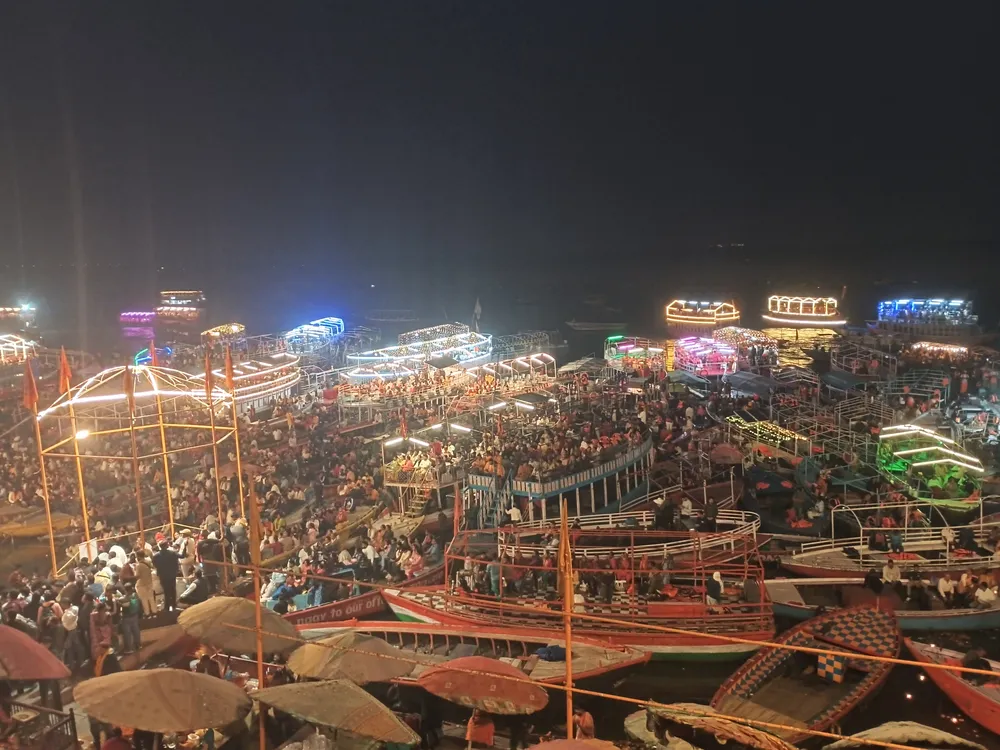
The spiritual side of India — Varanasi, the Ganges, its ceremonies — is also at the heart of our pilgrimages to India.
Rajasthan, the Taj Mahal and Varanasi in one journey: Colourful India is 15 days from Jaipur and Pushkar, through a safari in Ranthambore, to the Ganga Aarti ceremony on the Ganges. An English-speaking tour leader, February/March 2027, from 1,550 EUR.
Send me the programmeHoli — the festival of colours
Holi celebrates the end of winter and the arrival of spring, on the full moon of the month of Phalgun. It is a day when differences disappear: strangers, neighbours, bosses and staff throw coloured powder, gulal, at one another and drench each other with water. It is at its most colourful in the Braj region — in Mathura and Vrindavan, and a few days earlier in the towns of Barsana and Nandgaon, home of Lathmar Holi, where women playfully "beat" the men with sticks while the men shelter behind shields. Jaipur and Varanasi also celebrate Holi in style.
Holika Dahan (21 March) and the day of colours (22 March 2027)
Holi lasts two days. On the first evening the Holika Dahan bonfires are lit, recalling the legend of the demoness Holika, who tried to burn the young Prahlad, a devotee of Vishnu, and was burned herself. The next morning Rangwali Holi begins — the day of colours, which usually lasts until early afternoon.
According to Drik Panchang for New Delhi and most calendars, in 2027 Holika Dahan falls on Sunday 21 March and the day of colours on Monday 22 March. Some calendars move both a day later, and the Indian central government's official list of holidays for 2027 gives Holi as Tuesday 23 March. If you are planning a trip around Holi, book all three days at your destination.
How to prepare: clothes, eyes, phone, advice for women
- Clothes you can throw away. The colours do not always wash out. A white T-shirt is the classic choice and looks great in photos.
- Skin and hair. Coconut oil applied before going out makes the colour easier to wash off. Cover your hair with a cap or scarf.
- Eyes. Sunglasses keep the powder out; contact lenses are best left at the hotel.
- Phone and camera. A waterproof case or a zip-lock bag. Money and documents in a zipped pocket.
- Food and drink. Bhang, a cannabis-based drink, is part of the celebrations and is sometimes served in sweets and drinks without warning. If you don't know what you are drinking, don't drink it.
- Women. To be honest: in a crowd where everyone is touching everyone, some people cross the line. It is safer to celebrate in a group, in a hotel garden or at an organised event, and to finish before midday, when the streets get rowdier. More practical advice in is India safe to travel and on our page India for solo women.
Other festivals worth knowing: Pushkar Camel Fair, Dev Deepawali, the Jaisalmer Desert Festival
- Pushkar Camel Fair — according to the Rajasthan Tourism calendar, 17 to 24 November 2026, culminating on the full moon of Kartik. Livestock trading, contests and pilgrims bathing in the sacred lake. Note that the last day of the fair coincides with Dev Deepawali in Varanasi — you cannot see both.
- Dev Deepawali in Varanasi — 24 November 2026, fifteen days after Diwali. Best seen from a boat, which must be booked in advance.
- Jaisalmer Desert Festival — according to the Rajasthan Tourism calendar, 18 to 20 February 2027. Three days of folk music and dance, moustache and turban contests, with a finale on the Sam dunes. Some websites give other dates, so confirm them at the source before planning.
A night on the Sam dunes is part of Golden Cities of Rajasthan (16 days, February/March 2027, from 1,825 EUR). To be honest: the exact dates of our spring trips — including Colourful India — are confirmed by phone, and we do not promise that they will include the Desert Festival or Holi. If a particular festival matters to you, ask before you sign up.
Festivals and travel: crowds, prices, closed offices
A festival is also a matter of logistics:
- Crowds and transport. At Diwali, millions of Indians travel home to their families. Trains and domestic flights around the festival sell out early,.
- Prices. Hotels in festival towns — Pushkar during the fair, Varanasi at Dev Deepawali, Jaisalmer during the Desert Festival — get more expensive and fill up fast. Book well ahead.
- Closed offices and shops. Diwali and Holi are holidays in central government offices. On Holi morning many shops, restaurants and sights are closed.
- Delhi's air. In recent years, air quality in Delhi after Diwali has regularly dropped to "very poor" or "severe" on India's AQI scale — the result of fireworks and autumn crop burning. If you have asthma or breathing problems, avoid staying in Delhi right after Diwali.
- Respect. These are religious festivals. Shoes come off before entering a temple, and throwing colour at people who clearly don't want it — including older people — is out of place.
How the festivals fit with the weather month by month is covered in the best time to visit India, and tigers in Rajasthan in Ranthambore tiger safari.
In early spring 2027 there are two tours with an English-speaking tour leader through cities where Holi is celebrated in style: Pearls of North India — Delhi, Jaipur, Agra and the Taj Mahal, Khajuraho and Varanasi, with an expected departure on 10 March 2027 — and Colourful India across Rajasthan.
Sources
- Drik Panchang — Diwali 2026 calendar for Delhi
- Drik Panchang — Dev Deepawali 2026
- Drik Panchang — Holika Dahan and Holi 2027
- Government of India (DoPT) holiday list 2026 — Diwali on 8 November
- Government of India (DoPT) holiday list 2027 — Holi on 23 March
- Rajasthan Tourism — events calendar 2024–2030 (Pushkar, Desert Festival)
- Incredible India — Pushkar Camel Fair
- Utsav (Ministry of Tourism, India) — Bandi Chhor Divas in Amritsar
- Wikipedia — Lathmar Holi in Barsana and Nandgaon
- Business Today — Delhi air quality after Diwali 2024
Frequently asked questions
When is Diwali in 2026?
The main day of Diwali, Lakshmi Puja, falls on Sunday 8 November 2026. The celebrations last about five days: they begin with Dhanteras on 6 November and end with Bhai Dooj on 10 or 11 November, depending on the calendar.
When is Holi in 2027?
According to Drik Panchang and most Hindu calendars, the day of colours falls on Monday 22 March 2027, with the Holika Dahan bonfires on the evening of 21 March. The Indian government's official holiday list, however, gives Holi as 23 March, so it is worth planning all three days at your destination.
Where is the best place to experience Diwali?
Varanasi on the Ganges, Jaipur with its illuminated bazaars, or Amritsar, where Sikhs celebrate Bandi Chhor Divas on the same day at the lamp-lit Golden Temple. In Varanasi it is worth staying on for Dev Deepawali on 24 November 2026.
Is Holi safe for tourists?
Yes, if you celebrate sensibly: in a group, in the morning, in clothes you can throw away, with your eyes and phone protected. We advise women to celebrate at a hotel or an organised event, because people in crowds sometimes cross the line. Watch out for bhang, which is sometimes served without warning.
Do festivals push up travel prices?
Yes. Hotels in festival towns, such as Pushkar during the fair or Varanasi at Dev Deepawali, get more expensive and sell out fast, and trains and domestic flights around Diwali are full. Book well in advance.
Do Lotus Tours trips include Holi?
We do not promise that. Colourful India and Golden Cities of Rajasthan depart in February/March 2027, and the exact dates are confirmed by phone. If Holi or the Desert Festival matters to you, ask before you sign up.