Winter in Europe is the dry season in India: no monsoon, sunny days and monuments you can explore without wilting in the heat. That is why December, January and February are peak season in the north of the country and in Goa. But an Indian "winter" has its nuances: cold nights in Delhi, morning fog over the Ganges, smog, holiday prices, and mountains that are out of reach at this time of year. Here is what to know before you book a December flight.
The short answer
Yes, December is a good time for India — for the classic north (Delhi, Agra, Jaipur, Varanasi) and for the beaches of Goa. Daytime temperatures in the north are around 20–25°C, in Goa over 30°C. Three caveats: nights and early mornings in the north are cold (a few degrees above freezing), Delhi gets dense fog and poor air quality, and the stretch from Christmas Eve to New Year is the most expensive of the whole season. Leave Kashmir and Ladakh for the summer.
Winter weather region by region
| Place | December: day / night | January: day / night | Rain | Verdict |
|---|---|---|---|---|
| Delhi | c. 23°C / 8°C | c. 20°C / 7–8°C | negligible | good, but fog and smog |
| Agra | c. 24°C / 8°C | c. 22°C / 7°C | negligible | good, cold sunrises |
| Jaipur | c. 25°C / 10°C | c. 23°C / 9°C | negligible | very good |
| Varanasi | c. 24°C / 10°C | c. 22°C / 9°C | negligible | good, misty mornings |
| Goa (Panaji) | c. 33°C / 21°C | c. 32°C / 20°C | almost none | peak beach season |
| Leh (Ladakh) | — | c. 2°C / −13°C | snow | not for sightseeing |
Long-term averages (India Meteorological Department normals for 1991–2020; for Leh 1951–2020), rounded. In any given year a cold wave can push night temperatures in Delhi close to zero.
Delhi, Agra, Jaipur — sunshine and cold nights
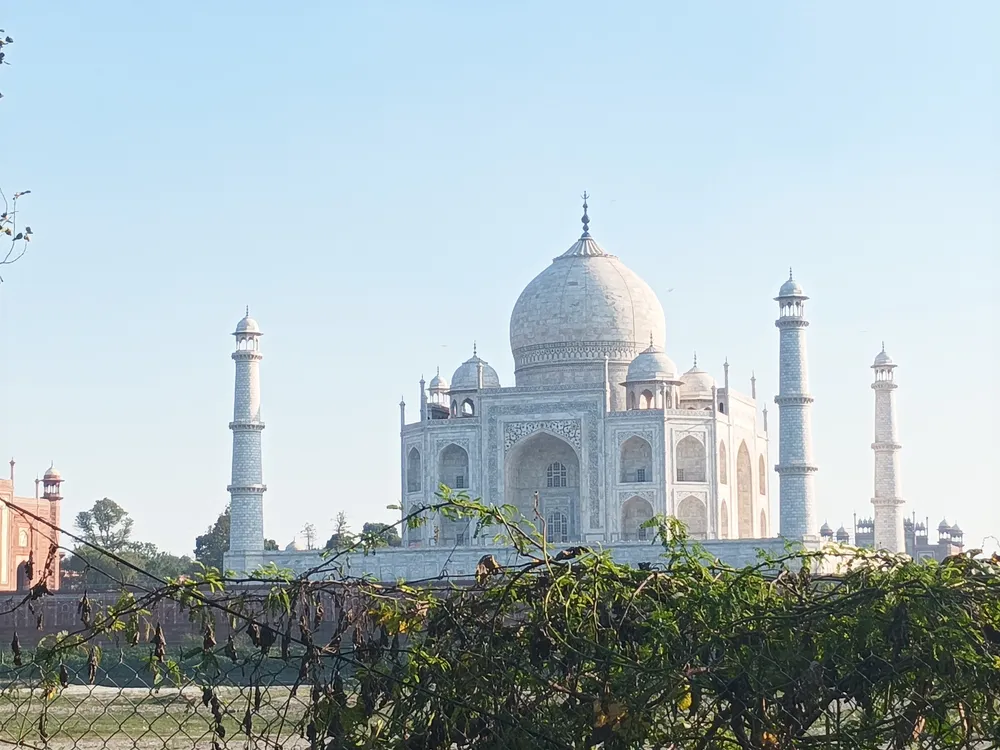
By day it feels like a warm early autumn in northern Europe: pleasant, dry and ideal for walking around forts. The catch comes after sunset and at dawn, when the temperature drops below 10°C — and Indian hotels rarely have good heating. It matters at the Taj Mahal at sunrise: on a marble terrace at six in the morning it is simply cold. We cover the visit in detail in Taj Mahal — how to visit.
The second issue is fog. In winter, dense morning fog forms over the Gangetic Plain and regularly delays flights in Delhi — the airport switches to low-visibility procedures (CAT III), and some flights are delayed or cancelled. Railways in North India usually suspend or thin out some trains in advance for the fog season, from December to February. The third is smog: in November and December Delhi's air quality is often very poor, sometimes in the "severe" category. Anyone with asthma or a lung condition should discuss it with their doctor before travelling.
To be honest: fog usually means a flight a few hours late, not a ruined trip. But that is why a good winter itinerary avoids tight connections — the last domestic flight should land in Delhi the day before your flight home, not the same morning.
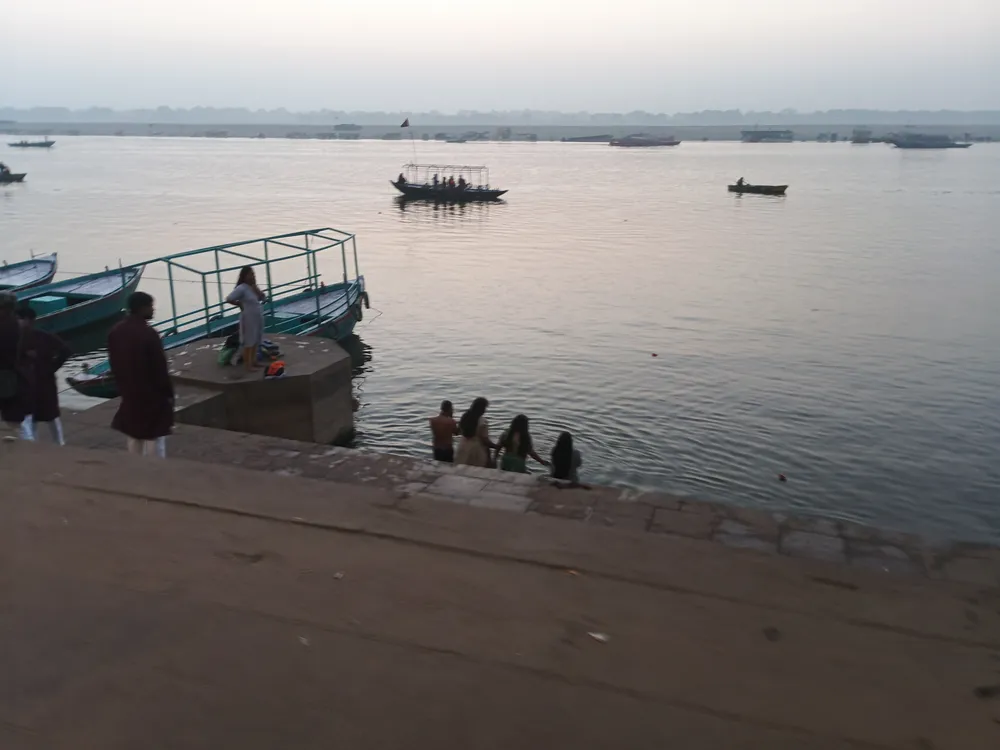
Varanasi at dawn in December
The dawn boat ride on the Ganges is a must in Varanasi, and in winter it looks nothing like the postcards: the ghats emerge slowly from the mist and the sun rises as a pale disc. Many people like it more than harsh sunlight. Just know that it is cold on the water — a hat and a fleece on the boat are not overdoing it. What else to see in the city is in Varanasi — what to see.
Goa and the south — peak beach season
December and January are Goa's best months: around 32–33°C by day, over 20°C at night and practically no rain. The season runs roughly from November to March; the beach shacks operate from autumn to spring and are taken down for the monsoon. If you are wintering in Goa, a short hop north — to the Taj Mahal and Jaipur — can be added to your stay; that is how our India in a Nutshell trip works.
Where not to go in winter: Kashmir, Ladakh, the Himalayas
In the mountains, winter is real. In Leh the average January night is well below −10°C, and the road from Srinagar to Ladakh over the Zoji La pass is often closed by snow for part of the winter. In the Kashmir Valley, Chillai Kalan, the coldest period of the year, runs from 21 December to 31 January. Winter Kashmir has its own charm — Gulmarg turns into a ski resort — but it is a ski trip, not a sightseeing one. Kashmir and Ladakh are for spring to autumn; more in Kashmir — is it safe and when to go.
December in North India: Pearls of North India — Delhi, Jaipur, Agra with the Taj Mahal at sunrise, Orchha, Khajuraho and Varanasi. 12 days with a tour leader, departure confirmed for early December 2026.
Send me the programmeChristmas in India
Christians are a minority in India, but 25 December is a national public holiday, and in big cities you will see Christmas trees, nativity scenes and lights in the shopping centres. Where can you really feel Christmas?
- Goa — according to the 2011 census, around 25% of residents are Christian, mostly Catholic, a tradition that goes back to Portuguese times. Midnight Mass is celebrated in many churches, including in Old Goa, home to the Basilica of Bom Jesus with the tomb of St Francis Xavier — part of the Churches and Convents of Goa, on the UNESCO list since 1986. Arrive early; it gets crowded.
- Delhi — the Sacred Heart Cathedral near Connaught Place draws large crowds of worshippers and visitors to Midnight Mass every year.
- Hotels — larger hotels hold festive dinners on Christmas Eve and Christmas Day. Ask when booking whether such a dinner is added to your room rate as compulsory — some hotels do this.
It will not feel like Christmas at home — but Midnight Mass in a Portuguese-era church in Goa or in a cathedral in Delhi is a memory you cannot have anywhere else.
New Year's Eve in India
The best-known place for New Year's Eve is Goa: beach parties, clubs and hotels with gala dinners. It is also the most expensive moment of the year — room rates in Goa rise sharply in the last week of December, and the best hotels sell out well in advance. In the north New Year's Eve is quieter and mostly happens in hotels.
In practice: roughly 20 December to early January is peak season in India and the holidays in Europe. Flights, hotels and tours all cost more — Pearls of North India carries a seasonal supplement of €200 for departures between 20 December and 5 January. If you want to spend the holidays in India, book early. If you only care about the weather, choose early December or the second half of January.
How many days and which route for a winter trip
For a first winter visit, the classic north works best: the Golden Triangle (Delhi, Agra, Jaipur) plus Varanasi. On this route winter is an advantage — warm days, and the drives are nothing like as tiring as in the April heat. What to see on the Triangle itself is covered in the Golden Triangle: what to see.
Our Pearls of North India is exactly that route in 12 days: Delhi, Jaipur with Amber Fort, Fatehpur Sikri, Agra with the Taj Mahal at sunrise, Orchha, the temples of Khajuraho and Varanasi with the Ganga Aarti ceremony and a dawn boat ride. The Khajuraho–Varanasi and Varanasi–Delhi legs are flown, and the return to Delhi is the day before departure — a buffer against fog. From €900 per person in the 3★ option and from €1,150 in the 4★ option, international flights not included; an early December departure is not subject to the holiday supplement. The tour operator is the Indian agency Abyss Tours; Lotus coordinates the trip and provides the tour leader.
If this is your first time in India, read first time in India too — on what to expect and how not to overdo the pace.
What to pack for an Indian winter
One rule: layers. Mornings and evenings in the north are in single digits or low teens, midday is over 20, and Goa is in the thirties. For a winter trip to the north, bring:
- A light down jacket or warm coat — for sunrise at the Taj Mahal, the boat on the Ganges and the evenings. Packed into its own bag it takes little space.
- A fleece or jumper and a hat — hotels are often poorly heated.
- Light, covering clothes for the day — long trousers, long-sleeved shirts, a scarf for your shoulders in temples.
- Comfortable closed shoes and socks, because in temples you walk barefoot on cold stone.
- A filtering mask (e.g. FFP2 or N95) — for smoggy days in Delhi.
- Sunscreen and sunglasses — the winter sun in India still burns.
The full list is in what to pack for India.
Sources
- Climate of Delhi (Wikipedia, IMD data) — winter temperatures and fog in Delhi
- Climate of Agra (Wikipedia, IMD normals 1991–2020) — temperatures in Agra
- Jaipur (Wikipedia, IMD normals 1991–2020) — temperatures in Jaipur
- Varanasi (Wikipedia, IMD normals 1991–2020) — temperatures and winter fog in Varanasi
- Panaji (Wikipedia, IMD data) — temperatures and rainfall in Goa
- Leh (Wikipedia, IMD normals) — January temperatures in Ladakh
- All India Radio News — fog and CAT III procedures at Delhi airport
- The Tribune — trains suspended for the fog season
- Centre for Science and Environment — winter smog in Delhi
- The Tribune — winter closure of the Zoji La pass
- Kashmir Life — Chillai Kalan, 21 December to 31 January
- Incredible India (Ministry of Tourism) — skiing in Gulmarg
- Government of India — gazetted holidays 2026 (Christmas)
- Christianity in Goa (Wikipedia, 2011 census) — share of Christians in Goa
- India at UNESCO — Churches and Convents of Goa, inscribed in 1986
- The Tribune — Christmas at the Sacred Heart Cathedral in Delhi
- Business Standard — Goa hotel rates on New Year's Eve
- One Mile at a Time — compulsory holiday gala dinners at hotels
- Incredible Goa — the beach shack season in Goa
Frequently asked questions
Is December a good month to visit India?
Yes, for the north (Delhi, Agra, Jaipur, Varanasi) and for Goa. Daytime temperatures in the north are around 20–25°C, in Goa over 30°C, and there is practically no rain. Expect cold mornings, fog and smog in Delhi, and high prices between Christmas and New Year.
What is the weather like in India in December?
It depends on the region. Delhi and Agra average around 23–24°C by day and 8°C at night; Jaipur and Varanasi are slightly warmer. Goa has around 33°C by day and 21°C at night. In the Himalayas, for example in Leh, it is below freezing.
Can fog in Delhi ruin a trip?
Usually it means a delayed flight or train rather than a lost day. Delhi airport then operates under low-visibility procedures and some flights are rescheduled. That is why in winter it is wise to fly into Delhi the day before your flight home.
Where to spend Christmas in India?
Goa is the most festive, with around a quarter of residents Christian and Midnight Mass celebrated in churches including those of Old Goa. In Delhi, Midnight Mass at the Sacred Heart Cathedral near Connaught Place draws crowds. 25 December is a national public holiday in India.
Can you visit Kashmir or Ladakh in winter?
Not for sightseeing. In Leh January nights average well below −10°C, and the Zoji La pass on the road to Ladakh is often closed by snow. Winter Kashmir is mainly about skiing in Gulmarg. For the mountains, go between spring and autumn.
What should I pack for a winter trip to India?
Layers: a light down jacket or warm coat for mornings and evenings, a fleece, a hat, and light covering clothes for the day. Add comfortable shoes, sunscreen and a mask for smoggy days in Delhi. In Goa, summer clothes are enough.