Kashmir is the region of India people ask about most cautiously. On one side — "paradise on earth", as the emperor Jahangir called it: Dal Lake with its houses on the water, Mughal gardens, meadows under snow-capped peaks, apples and saffron. On the other — decades of news dominated by conflict. Both pictures are true. This guide is meant to help you decide whether and when to go, without sugar-coating and without scaremongering.
The short answer
The tourist part of the Kashmir Valley — Srinagar, Gulmarg, Pahalgam, Sonamarg — is visited today by organised groups and is, as a rule, safe, provided you keep to the tourist circuit, a local partner and the current travel advice of your foreign ministry. It is not a region for independent wandering. The best season is April to October, and if you cope badly with the heat of lowland India, Kashmir in summer is one of the most pleasant things the country has to offer.
Is Kashmir safe — without the sugar-coating
Kashmir has been disputed between India and Pakistan since 1947. In the Valley you see it every day: military posts, road checkpoints, soldiers at important sites. For a visitor that mostly means showing a passport and being patient rather than danger — but it is worth knowing that this is what the landscape looks like.
After 2019 tourism in the Valley grew year on year and broke records in 2022–2024. In April 2025, however, an attack on tourists in a meadow near Pahalgam killed 26 people — the first such event in many years — and in May 2025 there was a brief military escalation between India and Pakistan. Tourism froze for several months, then gradually returned, with tighter security at the places visitors go.
What that means in practice:
- Check your government's travel advice before booking and before flying. Most Western foreign ministries advise against travel to the border areas of Jammu and Kashmir along the Line of Control; the tourist towns of the Valley are treated separately, and the advice is updated from time to time.
- Travel with a local partner who knows the situation day to day — our Kashmir programmes are operated by Abyss Tours with a team on the ground, and dates and routes are agreed with them and with the current advice.
- Keep to the tourist circuit: Srinagar, Gulmarg, Pahalgam, Sonamarg and the roads between them. Do not head towards the Line of Control or to places that are not on the programme.
- Listen to the guide when they say we are not going somewhere today. Kashmir has local strikes (bandh) and road closures — the programme has a buffer for them.
- Carry copies of your passport and visa — some checkpoints require them.
Srinagar and Dal Lake
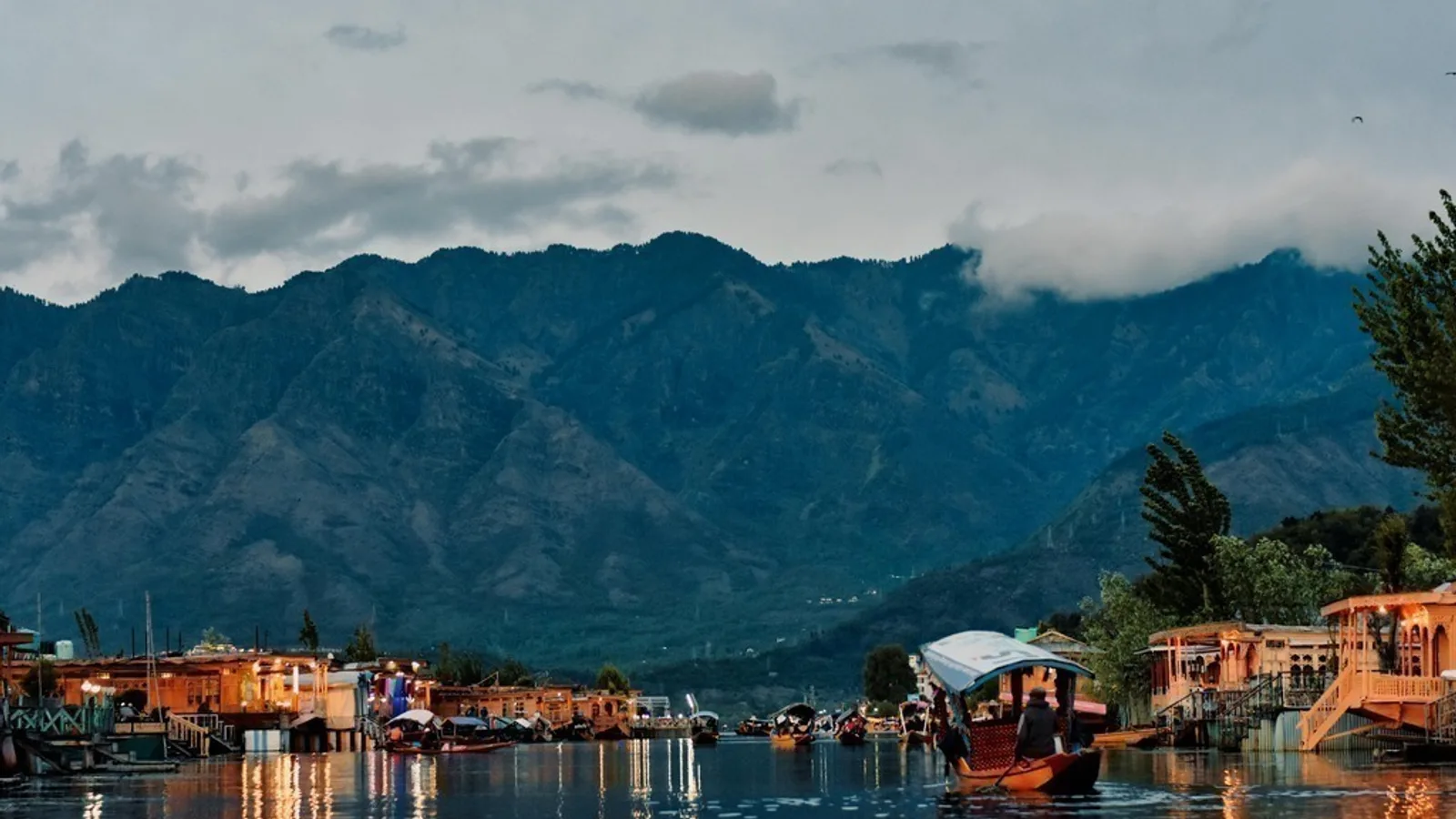
The region's summer capital lies at 1,600 m on Dal Lake — and the lake is the heart of every visit. You sleep on houseboats: wooden houses on the water with carved ceilings, carpets and a veranda, some of them dating from British times. You cross the lake by shikara, a narrow canopied boat, and at dawn you can see the floating vegetable market, where trading is done boat to boat.
On the shore — the Mughal gardens: Shalimar Bagh (built by Jahangir for his wife in 1619), Nishat Bagh with terraces stepping down to the lake, and Chashme Shahi with its mountain spring. In the old city: the Jama Masjid with its forest of wooden columns, and the Hazratbal shrine on the water. From Shankaracharya hill there is a view over the whole lake and city.
Gulmarg, Pahalgam and Sonamarg
- Gulmarg (2,650 m, 50 km from Srinagar) — the "meadow of flowers", alpine pasture and a golf course in summer, a ski resort in winter. The main attraction is the gondola, one of the highest in the world: the first stage to 3,050 m, the second to nearly 4,000 m on the Apharwat ridge, with views of the peaks towards Pakistan. It is cold and thin-aired at the top — a short stay and a warm jacket.
- Pahalgam (about 2,200 m) — the valley of the Lidder river, pine forests, ponies, excursions to the Betaab and Aru valleys. A quiet place for walks and picnics; in summer the base for the Amarnath pilgrimage, when it gets crowded.
- Sonamarg (2,800 m) — the "meadow of gold" at the foot of the Zoji La pass, with the Thajiwas glacier reached on foot or by pony. This is where the road to Ladakh begins.
When to go to Kashmir
| Season | What happens | For whom |
|---|---|---|
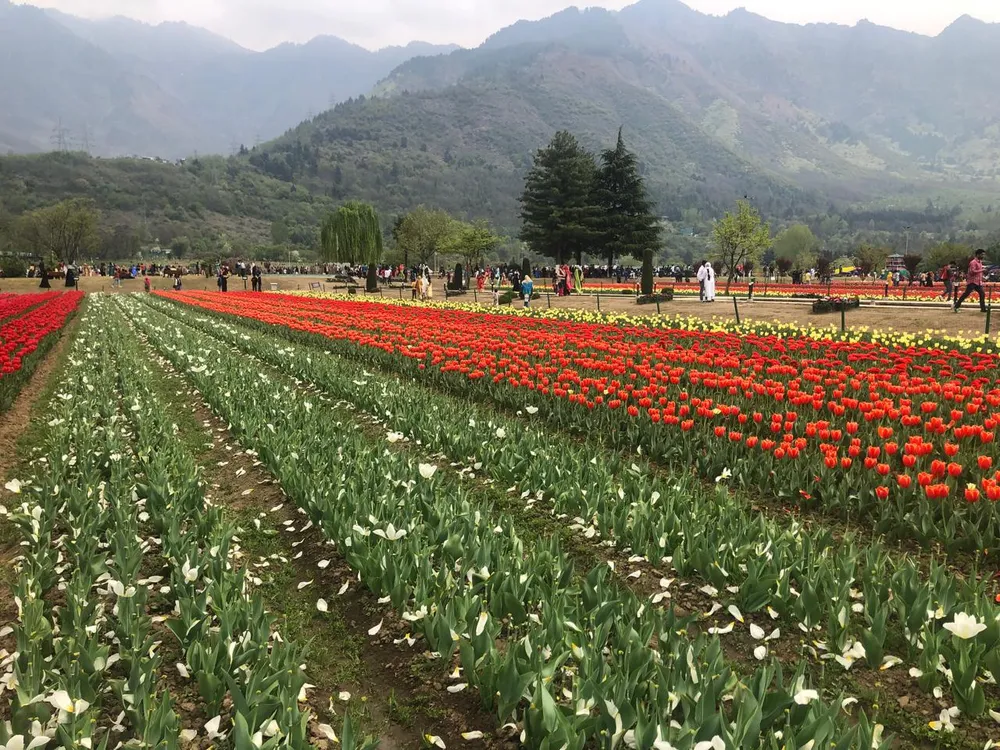
| Spring (late March – May) | Almond blossom and tulips — the tulip garden in Srinagar, the largest in Asia, opens for 3–4 weeks around the turn of March and April. Cool, 10–20°C. | flower lovers and photographers |
| Summer (June – August) | 25–30°C in Srinagar, cooler in the mountains. Gardens in full bloom, meadows green. The most Indian visitors, escaping the heat of the plains. | anyone who copes badly with heat — the best time for a first visit |
| Autumn (September – October) | The chinar plane trees turn red, the apple harvest, saffron flowering in Pampore. Fewer people, clear air, 15–25°C. | those who prefer quiet and colour |
| Winter (December – February) | Snow, below zero in Srinagar, Dal Lake partly frozen. Skiing in Gulmarg. | skiers; not for a classic trip |
Our departures: Kashmir: the Golden Valley in June and September, Kashmir and Ladakh in July and September — because the road over Zoji La to Ladakh is only open from May to November.
Kashmir without guesswork: the Golden Valley is 12 days — Delhi, Amritsar with the Golden Temple and the Wagah border ceremony, Srinagar, Gulmarg, Pahalgam and a night on a houseboat. A tour leader, a proven partner on the ground, from 1,060 EUR.
Ask about a tripOn the way: Amritsar and the Wagah border
The road to Kashmir runs through Punjab, and that is a chance to see two places worth a journey in their own right. The Golden Temple in Amritsar — the holiest site of the Sikhs, gilded, standing in the middle of a pool, open to everyone around the clock; its kitchen serves tens of thousands of free meals every day. And Wagah, the border crossing with Pakistan, where every afternoon soldiers from both sides perform a theatrical flag-lowering ceremony in front of thousands of cheering spectators. Both are on our Kashmir programmes.
Culture, food and shopping
Kashmir is mostly Muslim and more conservative than Delhi or Goa. A few things to remember:
- Dress — shoulders and knees covered; a headscarf for women in mosques and shrines.
- Alcohol — practically unavailable outside a handful of hotels. Worth knowing in advance.
- Friday — the day of prayer; some shops close in the middle of the day.
- Hospitality — legendary. An invitation to kahwa, green tea with saffron, almonds and cardamom, is the norm, and refusing is awkward.
The food is a chapter of its own: wazwan, a multi-course feast of lamb (rogan josh, gushtaba, rista) served on shared platters. It is rich and aromatic, but usually not as hot as the south. The rules of safe eating apply exactly as in the rest of India — food in India.
Shopping: pashmina (the real thing is expensive — if a shawl costs 20 EUR, it is not pashmina), saffron from Pampore, carved walnut wood, papier-mâché and carpets. Buy in established workshops pointed out by the guide, not from the vendors who paddle up to the houseboat — there the price starts at five times the real one.
Practicalities: phones, altitude, weather
- Phones. For security reasons prepaid SIM cards from other Indian states do not work in Kashmir — only postpaid ones. International roaming works (expensively), and hotels and houseboats have Wi-Fi. Short shutdowns of mobile internet also happen. The tour leader and the partner have local numbers, so the group is never out of contact.
- Altitude. Srinagar (1,600 m) causes no problems. Gulmarg and the upper gondola station (up to 4,000 m) — a short stay, a slow pace, plenty of water; with heart or lung conditions it is better to skip the upper stage. Ladakh (3,500 m and above) is a separate category — acclimatisation there is not optional.
- Clothing. Even in summer evenings by the lake are cool and the gondola is freezing. Layers, a fleece, a rain jacket. The list: what to pack for India.
- Getting there. By air from Delhi to Srinagar (1.5 h) or — as on our programmes — via Amritsar. Flights to Srinagar are sometimes delayed by weather; the programme allows for it.
- Health. Standard preparation as for the rest of India: vaccinations and a travel medical kit. Insurance with medical cover is essential.
General safety in India — from pickpockets to traffic — is covered in is India safe to travel, and the seasons across the whole country in when is the best time to visit India.
Frequently asked questions
Is Kashmir safe for tourists?
The tourist part of the Valley — Srinagar, Gulmarg, Pahalgam, Sonamarg — is visited by organised groups and is, as a rule, safe if you keep to the tourist circuit, a local partner and official travel advice. The region is disputed, the military and checkpoints are visible, and in April 2025 there was an attack on tourists near Pahalgam. It is not a place for independent wandering.
When is the best time to visit Kashmir?
April to October. Summer (June to August) is 25–30°C with the gardens in full bloom — the best time for a first visit and an escape from the heat. Tulips bloom in spring; in autumn the plane trees turn red and saffron is harvested. Winter brings snow and frost.
Is a night on a houseboat comfortable?
Yes. Houseboats on Dal Lake are wooden houses on the water with bedrooms, bathrooms, a lounge and a veranda; the better ones have heating and Wi-Fi. Breakfast and dinner are served on board. It is one of the most distinctive experiences Kashmir offers.
Do phones work in Kashmir?
International roaming works, but expensively. Indian prepaid SIM cards from other states do not work in Kashmir — only postpaid ones. Hotels and houseboats have Wi-Fi, although short mobile internet shutdowns happen. The tour leader and partner have local numbers.
Is Kashmir suitable for older travellers?
Yes — it is one of the most pleasant regions of India in summer, with a mild climate and a walking pace. Only the upper stage of the Gulmarg gondola (nearly 4,000 m) calls for caution with heart or lung conditions. Ladakh is a separate, high-altitude category.
Can Kashmir be combined with Ladakh?
Yes, by road through Sonamarg, the Zoji La pass and Kargil to Leh — open from May to November. That is our Kashmir and Ladakh trip, 17 days, with Pangong Lake and the Nubra Valley. It requires proper acclimatisation and two rest days in Leh.