Delhi is where almost every journey through northern India begins — and a city many visitors want to leave as quickly as possible. That is a pity, because beneath the noise, the traffic and the crowds lie two completely different worlds: the Old Delhi of the Great Mughals, with its mosque, fort and bazaars, and New Delhi — broad avenues, gardens and tombs, one of which served as the model for the Taj Mahal.
This guide covers what to see, how much time to allow, how to behave in places of worship and what to watch out for, so that Delhi is a good start to your trip rather than an exhausting one.
The short answer: what not to miss
- Old Delhi: the Jama Masjid, a rickshaw ride through Chandni Chowk and the Red Fort.
- Humayun's Tomb — a Mughal garden tomb that anticipates the Taj Mahal.
- Qutub Minar — a minaret more than 72 metres tall, begun at the end of the 12th century.
- India Gate and Kartavya Path — the ceremonial heart of New Delhi.
- The Lotus Temple or Gurudwara Bangla Sahib — two islands of calm in a loud city.
To see all of this you need two days: one for Old Delhi and one for New Delhi. In a single day you will cover the highlights, but in a rush and mostly through a car window. Remember that on Mondays the Red Fort, the Lotus Temple and the Akshardham complex, among others, are closed.
Old Delhi — Shah Jahan's city
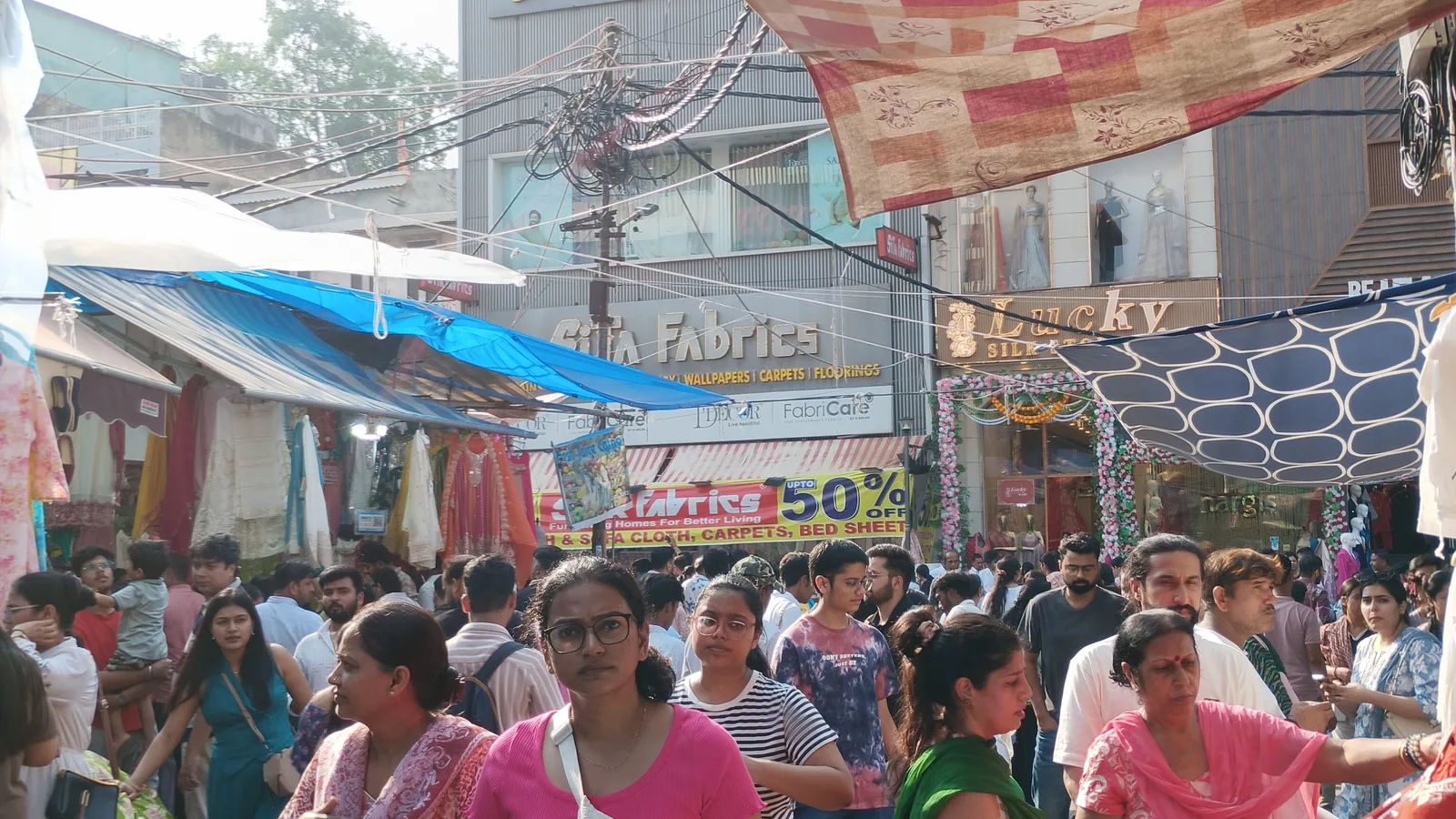
Old Delhi (historically Shahjahanabad) was built in the 17th century by the emperor Shah Jahan — the same man who built the Taj Mahal. It is a maze of narrow lanes where rickshaws, porters, scooters and the occasional cow share a single lane of traffic, and every street has its speciality: silver here, paper there, spices further on.
Jama Masjid
One of the largest mosques in India, with a vast red sandstone courtyard and two minarets, built by Shah Jahan in the mid-17th century. Visitors are admitted outside prayer times; shoes are left at the entrance, and anyone in shorts or with bare shoulders is lent a cover-up. Taking photos with a camera or phone may carry an extra charge. From the courtyard you look down over the bazaars and rooftops of Old Delhi.
Chandni Chowk and the Khari Baoli spice market
Chandni Chowk is Old Delhi's 17th-century main street and today one enormous bazaar. It is best seen from a cycle rickshaw: you sit above the crowd, and the rickshaw driver knows the way through lanes where a visitor on foot quickly gets lost. At its western end begins Khari Baoli, often described as the largest wholesale spice market in Asia — sacks of chilli, turmeric and cardamom, porters with loads on their heads, and a smell you feel at the back of your throat. Bring tissues: the pepper and chilli really do make you sneeze.
The Red Fort
A red sandstone fortress built for Shah Jahan between 1639 and 1648 and inscribed on the UNESCO World Heritage List in 2007. You enter through the Lahori Gate, from whose ramparts the Prime Minister of India addresses the nation every year on Independence Day, 15 August. Inside, look for the covered Chatta Chowk bazaar, the Diwan-i-Aam hall of public audience and the marble Diwan-i-Khas hall of private audience. The fort is closed on Mondays.
Raj Ghat
A few minutes from the fort, in a quiet park by the Yamuna river, is Raj Ghat — a black marble platform marking the spot where Mahatma Gandhi was cremated in 1948. Shoes come off before you enter the memorial grounds. It is a good place to catch your breath after the bazaars.
New Delhi — avenues, gardens and tombs
New Delhi feels like another city: the British built it as the capital of British India, with wide avenues, roundabouts and bungalows set in gardens. Distances are large, so you get around by car or metro rather than on foot.
India Gate and Kartavya Path
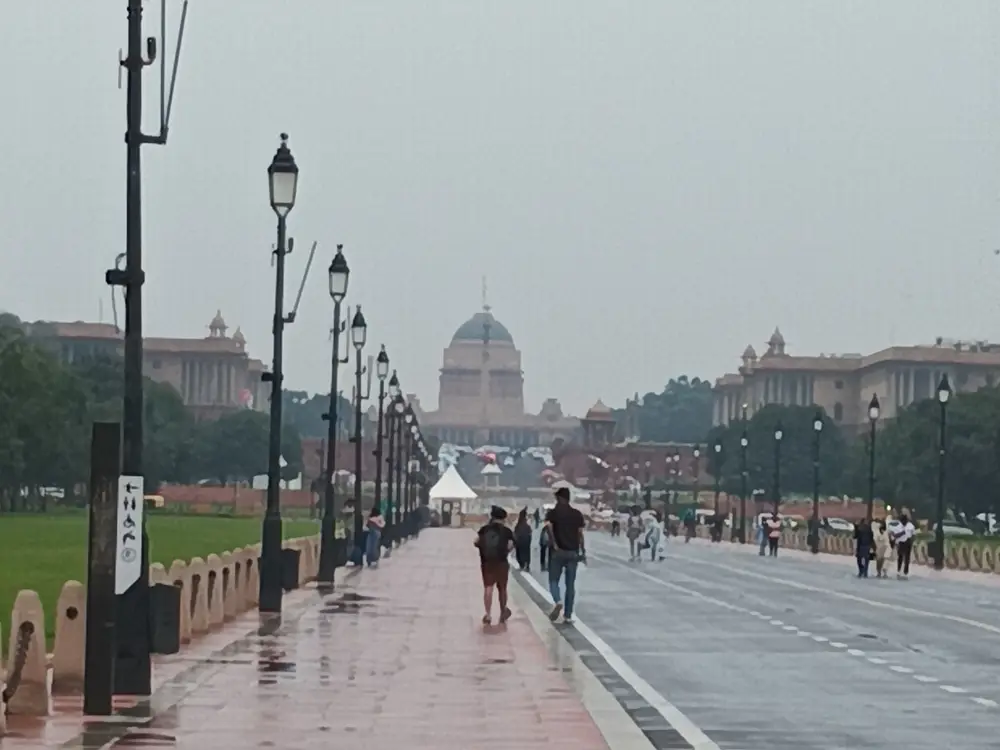
India Gate is a 42-metre triumphal arch designed by Edwin Lutyens and unveiled in 1931. It commemorates the soldiers of the British Indian Army who died between 1914 and 1921, mostly in the First World War; more than 13,000 names are inscribed on it. The National War Memorial (2019) stands next to it. From the arch, the ceremonial avenue Kartavya Path (called Rajpath until 2022) runs to the presidential palace, Rashtrapati Bhavan. In the evening the lawns fill with families picnicking and ice-cream sellers — a good moment to see everyday Delhi.
Humayun's Tomb
If you only have time for one monument in New Delhi, make it this one. The tomb of the emperor Humayun was commissioned by his widow, Bega Begum, and completed in 1572. It was the first garden tomb on the Indian subcontinent and the model for later Mughal mausoleums — the Taj Mahal above all. Red sandstone, white marble, a symmetrical garden divided by water channels, and usually far fewer people than in Agra. On the UNESCO list since 1993.
Qutub Minar
A five-storey minaret of red and grey sandstone, 72.5 metres high. Construction was begun in 1199 by Qutb ud-Din Aibak, the first Sultan of Delhi, and completed by his successor Iltutmish. The same complex (UNESCO, 1993) holds the ruins of the earliest surviving mosque of the Delhi Sultans and the famous Iron Pillar, with an inscription from the 4th century, which has barely rusted in more than fifteen hundred years. The complex lies in the south of the city, so it is usually combined with Humayun's Tomb or the Lotus Temple.
The Lotus Temple
The Bahá'í House of Worship, opened in 1986: 27 white marble petals arranged in the shape of an opening lotus. Anyone may enter, whatever their faith. Silence is kept inside — there are no sermons or rituals; you can simply sit. There is often a long queue at the entrance, but it moves quickly. Closed on Mondays.
Gurudwara Bangla Sahib
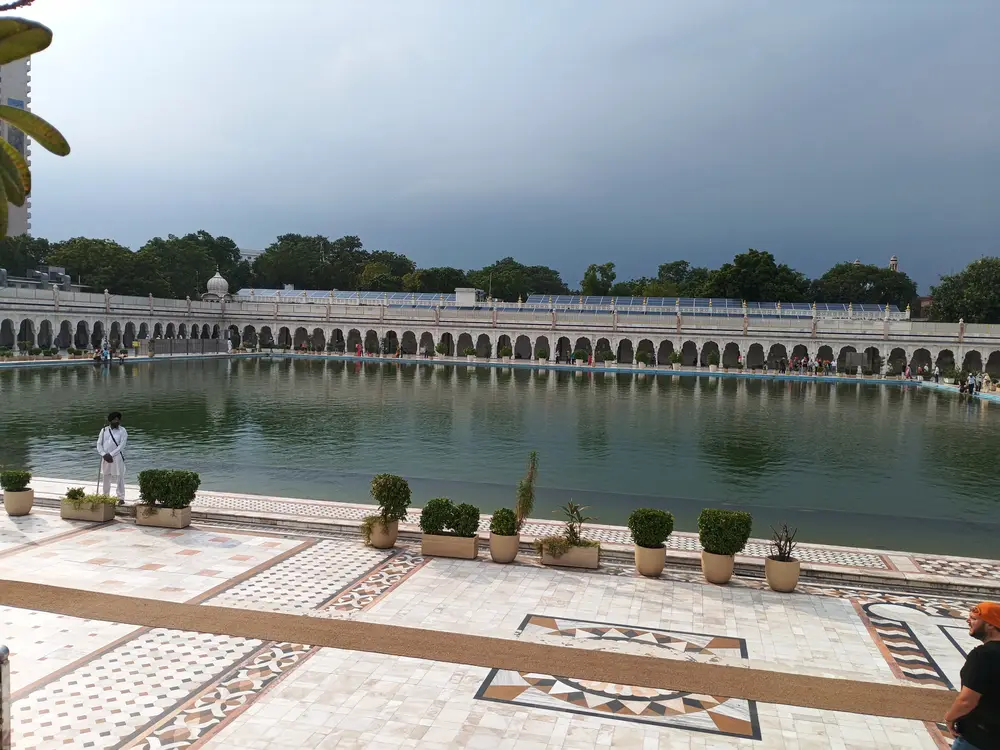
Delhi's most important Sikh temple, with a golden dome and a large holy pool (sarovar), close to Connaught Place. It is associated with the eighth Sikh Guru, Har Krishan, who stayed here in 1664. Everyone is welcome: shoes are left at the shoe store, feet are rinsed in a shallow channel at the entrance, and your head must be covered — scarves are provided. In the community kitchen (langar) volunteers serve free meals every day to anyone who comes, and you can look in to see how it works.
Akshardham — if you have more time
A huge temple complex of the Swaminarayan movement, opened in 2005, with a richly carved temple of pink sandstone and marble. It is impressive in scale but needs time and patience: phones and cameras are not allowed inside (they are left at the cloakroom), and the security check can take a while. Closed on Mondays.
Delhi with a tour leader: on Pearls of North India day two covers the Jama Masjid, rickshaws through Chandni Chowk, the Red Fort, India Gate, Humayun's Tomb and Qutub Minar, and the last evening is a street food tour of Old Delhi. 12 days, expected departure: 10 March 2027.
Send me the itineraryThe main sights at a glance
| Place | What it is | Time needed | Good to know |
|---|---|---|---|
| Jama Masjid | 17th-century mosque | 45 min | outside prayer times, shoes off |
| Chandni Chowk, Khari Baoli | Old Delhi bazaars | 1–1.5 hrs | best by rickshaw |
| Red Fort | Mughal fortress, UNESCO | 1.5 hrs | closed on Mondays |
| Raj Ghat | Gandhi's cremation site | 20–30 min | shoes off |
| India Gate, Kartavya Path | memorial and ceremonial avenue | 30 min | nicest towards evening |
| Humayun's Tomb | garden tomb, UNESCO | 1–1.5 hrs | a "dress rehearsal" for the Taj Mahal |
| Qutub Minar | minaret begun in 1199, UNESCO | 1 hr | in the south of the city |
| Lotus Temple | Bahá'í House of Worship | 45 min | silence inside, closed on Mondays |
| Gurudwara Bangla Sahib | Sikh temple | 45 min | head covered, free kitchen |
Visiting time only, without travel. Getting between districts of Delhi usually takes 30–60 minutes, longer at rush hour.
Itinerary: Delhi in one day and in two
Two days (recommended). Day one: the Jama Masjid in the morning, then rickshaws through Chandni Chowk and Khari Baoli, and the Red Fort and Raj Ghat in the afternoon. Day two: Humayun's Tomb, Qutub Minar and the Lotus Temple, with India Gate or Gurudwara Bangla Sahib towards evening.
One day. The Jama Masjid and a rickshaw through Chandni Chowk before noon, Humayun's Tomb after lunch, India Gate at sunset. The Red Fort and Qutub Minar then only from outside, or not at all — better to see three places calmly than six in a hurry.
On our tours Delhi is usually a day at the start and a short stay at the end. On Colourful India day two is Old Delhi with the Khari Baoli market and the Red Fort, and the penultimate day is New Delhi with the Lotus Temple and a farewell dinner. On Golden Cities of Rajasthan Old and New Delhi fit into one day before the drive to Mandawa, with two more days in the capital at the end, one of them free. How Delhi combines with Agra and Jaipur is covered in the Golden Triangle: what to see.
Food in Delhi
Old Delhi is one of the best places in India for street food: stuffed paratha flatbreads fried in ghee (a whole lane, Paranthe Wali Gali, is famous for nothing else), Mughlai kebabs and curries around the Jama Masjid, sweet jalebi straight from the oil and lassi in a clay cup. It is safer to try it with someone who knows the reliable places — which is why Pearls of North India ends with an evening street food tour of Old Delhi. What to eat in India and what to avoid is covered in our guide to food in India.
Practical tips
- The airport. From Indira Gandhi International Airport you can reach the centre on the Airport Express metro line (about 20 minutes to New Delhi station) or by taxi from the official prepaid booth in the arrivals hall. On a guided tour, your transfer is waiting for you. Landing in Delhi in the middle of the night is covered in flights to India.
- The metro is clean, cheap and the fastest option at rush hour. The first carriage in the direction of travel is reserved for women.
- Mondays. The Red Fort, the Lotus Temple and Akshardham are closed. Humayun's Tomb and Qutub Minar are open every day.
- Tickets. At monuments run by the Archaeological Survey of India, foreign visitors pay many times more than Indian citizens — usually a few hundred rupees per person per site. Tickets can be bought online or at the gate.
- Dress. For the mosque, the gurdwara and temples: shoulders and knees covered, shoes that slip off easily, and socks, because marble in the sun gets hot.
- Season. October to March is the most pleasant time. From November to January Delhi often has heavy smog and morning fog — more in India in December and winter. From April to June the heat goes above 40°C.
What to watch out for: the classic scams
Delhi is not dangerous, but it is a city where a visitor is, for some people, a source of income. Three tricks have been repeated for years:
- "Your hotel is closed." A driver or a stranger insists that your hotel has burned down, is full or is closed for a festival, and takes you to a "better" one. Do not believe it — call the hotel yourself.
- "The government tourist office." Around New Delhi railway station and Connaught Place, private agencies with "Government Tourist Office" signs sell overpriced tours. Official offices do not approach you in the street.
- "The ticket office is closed." At the station someone "helpful" says the ticket office is shut and leads you to an agency. The ticket office is open.
On a guided tour most of these situations simply do not arise, because transfers, hotels and tickets are already arranged. More on safety: is India safe to travel?
Sources
- UNESCO — Red Fort Complex (inscribed 2007)
- UNESCO — Humayun's Tomb (inscribed 1993)
- UNESCO — Qutb Minar and its Monuments (inscribed 1993)
- Red Fort (Wikipedia) — construction, Lahori Gate, Independence Day
- Humayun's Tomb (Wikipedia) — patron, completion, model for the Taj Mahal
- Qutb Minar (Wikipedia) — height, builders, the Iron Pillar
- India Gate (Wikipedia) — height, architect, names inscribed
- Lotus Temple (Wikipedia) — opening, 27 petals
- Gurudwara Bangla Sahib (Wikipedia) — Guru Har Krishan, the sarovar
Frequently asked questions
How many days do you need in Delhi?
Two days is a sensible minimum: one for Old Delhi (Jama Masjid, Chandni Chowk, the Red Fort) and one for New Delhi (Humayun's Tomb, Qutub Minar, the Lotus Temple, India Gate). In one day you will see the highlights, but in a hurry.
What are the must-see sights in Delhi?
The Jama Masjid and the Chandni Chowk bazaars in Old Delhi, the Red Fort, Humayun's Tomb, the Qutub Minar, India Gate, and either the Lotus Temple or the Sikh Gurudwara Bangla Sahib. Three of them — the Red Fort, Humayun's Tomb and Qutub Minar — are UNESCO World Heritage Sites.
Which sights in Delhi are closed on Mondays?
Among others, the Red Fort, the Lotus Temple and the Akshardham complex. Humayun's Tomb and Qutub Minar are open every day, so Monday is a good day for them.
Is Delhi safe for tourists?
Yes, with ordinary caution. The biggest nuisance is scams: fake "government tourist offices", drivers claiming your hotel is closed, and "helpful" people at the railway station. In the evening it is better to use a taxi booked by your hotel or through an app.
How do I get from Delhi airport to the city centre?
On the Airport Express metro line (about 20 minutes to New Delhi station) or by taxi from the official prepaid booth in the arrivals hall. On a guided tour, the airport transfer is arranged for you.
When is the best time to visit Delhi?
From October to March, when days are warm but not hot. From November to January expect smog and morning fog, and from April to June heat above 40°C.