- The short answer
- Rules that apply in every place of worship
- Hindu temples
- Gurdwaras - Sikh temples
- Mosques - the Jama Masjid in Delhi
- Jain temples and Buddhist sites
- The ghats and cremations in Varanasi
- Khajuraho and Orchha - temples as monuments
- The rules at a glance
- How it works on our tours
- Sources
- Frequently asked questions
In an Indian temple, behave as you would want a guest to behave in your own place of worship: shoes off, modest clothes, a quiet voice, nothing touched unless invited, and a question before any photo. Beyond that, Hindu temples, Sikh gurdwaras, mosques and Jain temples each have their own customs.
This guide covers places of worship only. For general travel advice, see our guide for first-time visitors to India.
The short answer
- Shoes come off at the entrance almost everywhere. In gurdwaras you usually take off your socks too and wash your feet.
- Shoulders and knees covered, and in gurdwaras your head as well (women in mosques).
- Do not touch the images of deities, and do not point your feet at a shrine or at people.
- Photos only with permission. Many temples make you leave your phone and camera in a locker, and at the cremation ghats in Varanasi you never take pictures.
- Some temples admit Hindus only, such as the Jagannath Temple in Puri. That is respected, not negotiated.
Rules that apply in every place of worship
Shoes and socks
Shoes are left at a shoe counter by the gate. In most temples you can keep your socks on, which helps on stone and marble floors that get scorching by midday. Gurdwaras are the exception: you usually go in barefoot, after washing your feet. Wear slip-on shoes.
Clothing
Shoulders and knees covered, for men and women alike, plus a light scarf in your bag for your head. The detailed list is in the what to wear to temples section of our packing guide.
Hands and feet
Pass and receive things with the right hand, or with both hands, never with the left alone. When you sit on the floor, do not point the soles of your feet towards the deity, the altar or other people; tuck your legs under you or to one side.
Images and ritual objects
Do not touch the images of deities; usually only priests do, during the ritual. The same goes for lamps and offerings, unless someone clearly invites you.
Photos and phones
Rules differ: one temple allows photos, another charges for them, a third makes you leave your phone and camera in a locker. Never photograph people at prayer without consent. Keep your phone on silent.
Hindu temples
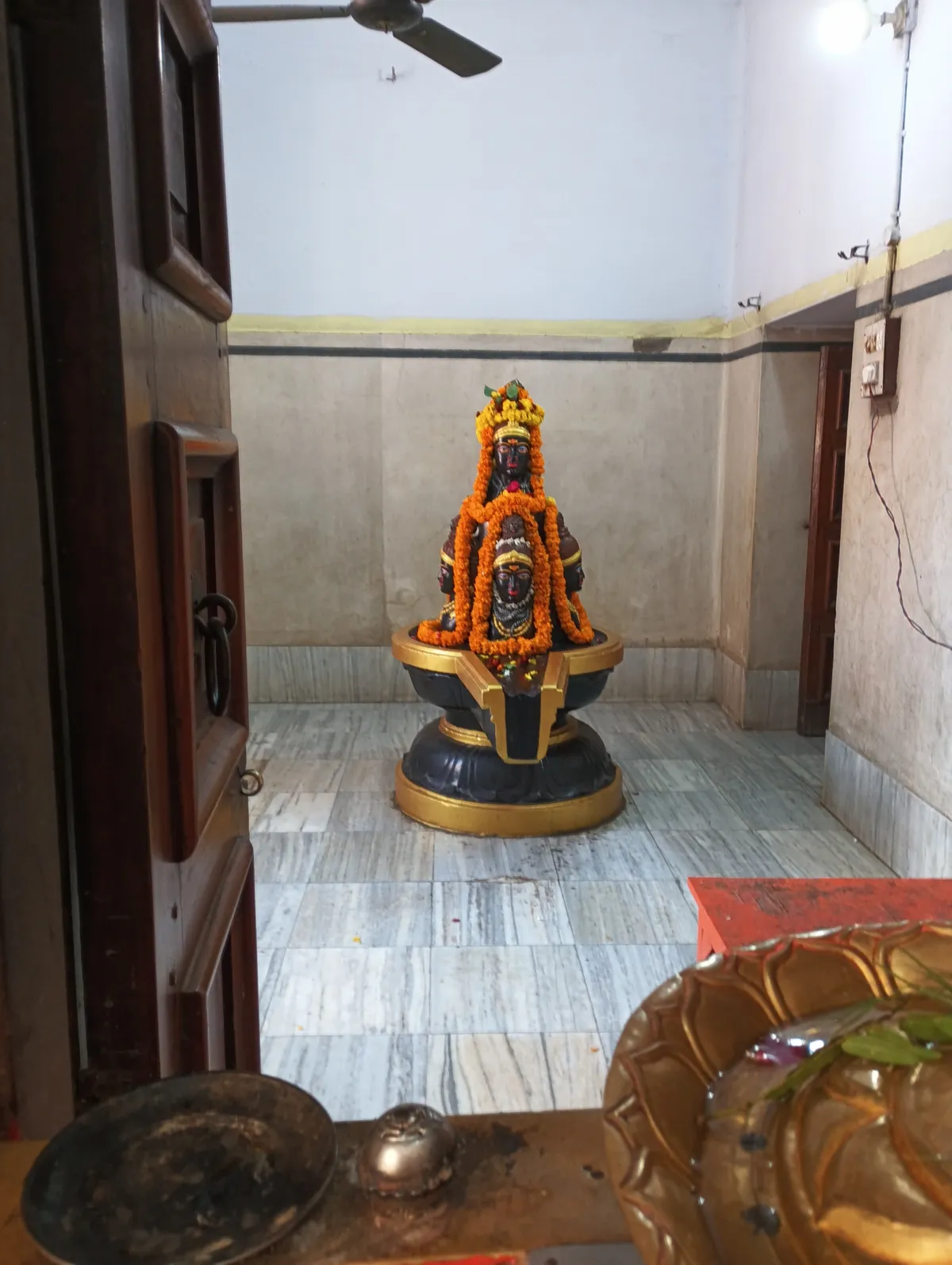
You will see these most often. A Hindu temple is not a hushed church: it can be loud, full of bells, singing, flowers and people stopping by on their way to work.
Darshan and the queue
Worshippers come above all for darshan, to see the image of the deity in the innermost sanctum. Large temples have a queue for this, sometimes a long one. You do not have to join it, but never push ahead or hold up the line at the shrine.
Offerings and prasad
Stalls by the entrance sell flowers, sweets and coconuts as offerings; you do not have to buy any. If a priest or a worshipper hands you prasad, food that has been blessed, take it with your right hand. Refusing it or throwing it away is seen as disrespectful, so if you would rather not eat it, simply pass it on to someone else.
Priests and donations
In popular temples someone dressed as a priest may invite you for a "special blessing" and then ask for a donation, sometimes a large one. Thank them politely and walk on. If you want to give, use the temple's donation box.
Walking around the shrine
The sanctum is circled clockwise, so that the deity stays on your right. If you are not sure which way to go, follow the worshippers.
Where visitors cannot go
Some temples admit Hindus only. The best-known example is the Jagannath Temple in Puri. Elsewhere, as at the Kashi Vishwanath Golden Temple in Varanasi, the rules for foreign visitors change from time to time, and phones and bags go into a locker. Your tour leader checks the current rules on the spot; see also our guide to what to see in Varanasi.
Temples with a tour leader: Pearls of North India includes the Jama Masjid in Delhi, the Lakshmi Narayan temple in Orchha, the UNESCO-listed temples of Khajuraho, the Ganga Aarti in Varanasi and Buddhist Sarnath. 12 days, from €900, expected departure: 10 March 2027.
Send me the itineraryGurdwaras - Sikh temples
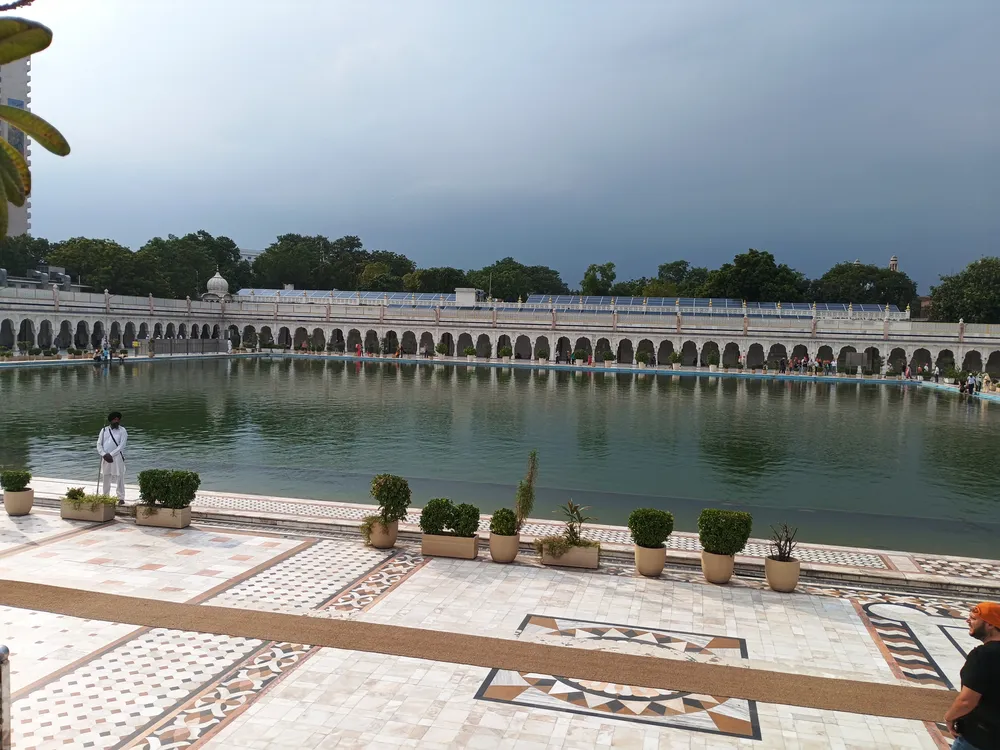
A gurdwara is open to everyone, whatever their faith. The rules are simple:
- Head covered, for women and men. Scarves are usually available at the entrance.
- Shoes, and usually socks, are left at the shoe counter, and you wash your hands and feet before going in.
- Tobacco, alcohol and other intoxicants are strictly forbidden on the premises.
- The holy pool (sarovar) is sacred: do not pollute it.
Every gurdwara runs a langar, a free community kitchen. Volunteers serve a vegetarian meal to anyone who comes, and everyone eats together, sitting on the floor.
At the Golden Temple in Amritsar photography is not allowed in the sanctum and filming is prohibited; photos on the walkway around the pool are often tolerated, but the rules change, so ask the staff. When you sit around the pool you keep your legs folded. Amritsar is part of the Kashmir: the Golden Valley itinerary, and Gurudwara Bangla Sahib in Delhi is covered in our guide to what to see in Delhi.
Mosques - the Jama Masjid in Delhi
The mosque you are most likely to visit with us is the Jama Masjid in Old Delhi, built by Shah Jahan in the mid-17th century. Visitors are admitted only outside prayer times. Shoes stay at the entrance. Anyone in shorts or with bare shoulders is lent a cover-up, and women will find a headscarf useful. Taking photos with a camera or phone may carry an extra charge.
Jain temples and Buddhist sites
Jainism places enormous weight on not harming living beings, so Jain temples have a ban on anything made of leather: belts, wallets, handbags. Some Hindu temples have the same rule. At the famous Dilwara temples on Mount Abu cameras and phones are banned as well, and tourists are admitted only after the worshippers' morning prayers. The Golden Cities of Rajasthan route includes the Jain temple of Bhandasar in Bikaner, so it is best to leave your belt and wallet at the hotel or in the vehicle.
At Sarnath, near Varanasi, where by tradition the Buddha gave his first teaching, stands the Dhamek Stupa. Pilgrims from all over Asia walk around it clockwise, often in silence. If you join them, do not go against the flow.
The ghats and cremations in Varanasi
The whole Ganges riverfront is sacred to Hindus. At the cremation ghats, above all Manikarnika, there are no photos or videos. Watch from a distance and in silence, or walk away. Ignore the "guides" who explain the cremations and then ask for a donation "for wood". The evening Ganga Aarti at Dashashwamedh Ghat is public and photos are normal there, but keep out of the priests' space and do not push to the front.
Khajuraho and Orchha - temples as monuments
The temples of Khajuraho, inscribed on the UNESCO World Heritage List in 1986, are visited today mainly as a monument, with a ticket and a guide, across the lawns of the Western Group. Treat them as an open-air museum: do not touch the carvings, climb the walls or lean on them for a photo. The exception is the Matangeshvara temple, which is still in active worship, so the rules of a living temple apply there. The Lakshmi Narayan temple in Orchha, known for its wall and ceiling paintings, is likewise visited mainly as a historic monument. Do not touch the paintings.
The rules at a glance
| Place | Shoes | Head | Photos | Also note |
|---|---|---|---|---|
| Hindu temple | off, socks usually fine | usually uncovered | varies, often banned in the sanctum | prasad with the right hand, walk clockwise |
| Gurdwara | off, usually socks too | covered, everyone | ask; in Amritsar banned in the sanctum and for filming | wash your feet, no tobacco or alcohol |
| Mosque | off | women covered | may carry a fee | only outside prayer times |
| Jain temple | off | usually uncovered | often banned | nothing made of leather |
| Buddhist stupa | depends on the site | uncovered | ask at the entrance | walk around clockwise |
| Cremation ghats | no change | uncovered | never | silence, distance, no "guides" |
| Khajuraho (monument) | as staff direct | uncovered | as per the site rules | ticket, do not climb on the carvings |
General rules only. The notice at the entrance and the temple staff always have the final word.
How it works on our tours
Temples feature in most of our itineraries; on Pearls of North India they include the Jama Masjid, Orchha, Khajuraho, Varanasi and Sarnath. Jaipur is on the way too, see our guide to what to see in Jaipur. If places of worship are the main reason for your trip, see our pilgrimages to India.
With a group of 10 or more, an English-speaking tour leader travels with you and on the spot explains what to take off and where photos are allowed. Smaller groups have ongoing remote support and round-the-clock assistance from the Abyss Tours team on the ground.
Sources
- Cultural Atlas - Indian Culture: Etiquette (hands, feet, shoes, leather, head covering)
- Circumambulation (Wikipedia) - clockwise circling in Hinduism and Buddhism
- Darshan (Wikipedia) - what darshan means
- Prasada (Wikipedia) - blessed food in Hinduism
- Jagannath Temple, Puri (Wikipedia) - entry restricted to Hindus
- The Tribune - the SGPC rule book for the Golden Temple (head covering, intoxicants, photography)
- The Tribune - dos and don'ts for visitors to the Golden Temple
- Gurdwara (Wikipedia) - gurdwaras open to all
- Langar (Wikipedia) - free community kitchen, vegetarian meals
- Incredible India - Dilwara Jain Temples (leather, cameras and phones banned, visiting hours for tourists)
- Jama Masjid, Delhi (Wikipedia) - founder and date of construction
- Sarnath (Wikipedia) - the Dhamek Stupa and the Buddha's first teaching
- Khajuraho Group of Monuments (Wikipedia) - UNESCO listing in 1986, the Matangeshvara temple still in worship
Frequently asked questions
Do I have to take my socks off in an Indian temple?
In most Hindu temples and in mosques you can keep your socks on, which helps on a hot floor. In gurdwaras you usually take off your shoes and socks and wash your feet before going in.
Can I take photos inside Indian temples?
It depends on the site. Some temples allow it, some charge a fee, and many make you leave your phone and camera in a locker. Never photograph people at prayer without consent, and never photograph the cremation pyres in Varanasi.
Can foreign tourists enter every temple in India?
No. Some temples admit Hindus only, the best-known example being the Jagannath Temple in Puri. Sikh gurdwaras, on the other hand, are open to everyone regardless of faith.
What should I do if a priest asks me for money?
You can thank them politely and walk away; there is no need to explain. If you want to support the temple, put a donation in the official donation box.
Can I eat for free at a gurdwara?
Yes. In the langar, the community kitchen, volunteers serve a free vegetarian meal to anyone who comes. Everyone eats together, sitting on the floor.
Why can I not wear a leather belt in a Jain temple?
Jainism forbids harming living beings, so leather items such as belts, wallets and handbags are not allowed on temple premises. It is easiest to leave them at the hotel or in the vehicle.