Money is the subject almost everyone asks about before a trip to India — and one on which guidebooks are surprisingly short of specifics. Below is everything we have worked out over years of travelling with groups: which currency to bring, where to change it, how much cash you really need and how not to be overcharged.
The short answer
Bring euros or US dollars in cash (new, undamaged notes) and two payment cards with foreign transactions enabled. Rupees are only available once you arrive. On a 12–15-day trip with hotels and breakfasts included, 300–450 EUR in cash usually covers lunches, dinners, tips, water and souvenirs — plus about 100 EUR for entry tickets to monuments, and a card for larger purchases and emergencies.
The Indian rupee — what to know
India's currency is the Indian rupee (INR, ₹). In recent years 1 EUR has moved between roughly 90 and 105 rupees and 1 USD between about 80 and 90 — check the current rate just before you travel. Notes in circulation are 10, 20, 50, 100, 200 and 500 rupees, with coins of 1, 2, 5, 10 and 20. The 2,000-rupee note was withdrawn in 2023 — if anyone tries to give you one, refuse.
For a rough feel: 100 rupees is about one euro. Street tea costs 10–20 rupees, a bottle of water 20–40, a meal in a good restaurant 400–900 rupees a head, a rickshaw ride across town 100–300 rupees.
Rupees are hard to buy abroad at a sensible rate, and officially visitors should not import or export them in any quantity. There is no point trying — changing money on arrival is simple.
Which currency to bring
Euros or US dollars. Both are accepted at every exchange bureau and the rates are transparent. Pounds sterling work but at slightly worse rates; other currencies are best changed before you leave home. Our trips are priced in euros, which is also why we recommend euros for cash.
- Clean, new notes without folds or writing. Indian bureaux reject damaged money or give a worse rate for it.
- Larger denominations (50, 100) often get a marginally better rate than small notes.
- Keep the receipts — you will need them if you want to change rupees back before you fly home.
Where to exchange money
- The airport. Rates are 5–10% worse than in town. Change enough for the first day — the equivalent of 30–50 EUR — and no more.
- Exchange bureaux in town (signed "Money Exchange" or "Forex"). Licensed, usually fair, and they require your passport. Your tour leader will point you to a reliable one, because not every bureau in a tourist district is equally good.
- The hotel. Convenient, but the rate can be poor. Fine in an emergency.
- An ATM. The simplest way to get rupees at close to the market rate — with the caveats below.
Never change money "by hand" — with a tout outside a bureau or with a driver. That is the easiest way to end up with counterfeit or withdrawn notes.
ATMs
Cities have plenty of ATMs and most accept Visa and Mastercard. A few things worth knowing:
- The limit per withdrawal is often 10,000 rupees (about 100 EUR), at some banks 20,000–25,000. Plan around it.
- The Indian bank's fee is usually 200–500 rupees per withdrawal, on top of your own bank's fee and any conversion charge. Withdraw less often and in larger amounts.
- Decline conversion to your home currency if the ATM offers it. Choose to be charged in rupees — the ATM's rate is always worse than your bank's.
- Use ATMs at bank branches, in hotels or in shopping centres, during the day. Shield the keypad. If the machine swallows your card or fails to dispense, tell your tour leader straight away.
- Revolut, Wise and similar cards work, but make sure foreign withdrawals are enabled before you travel and check your fee-free withdrawal limit.
Do cards work in India?
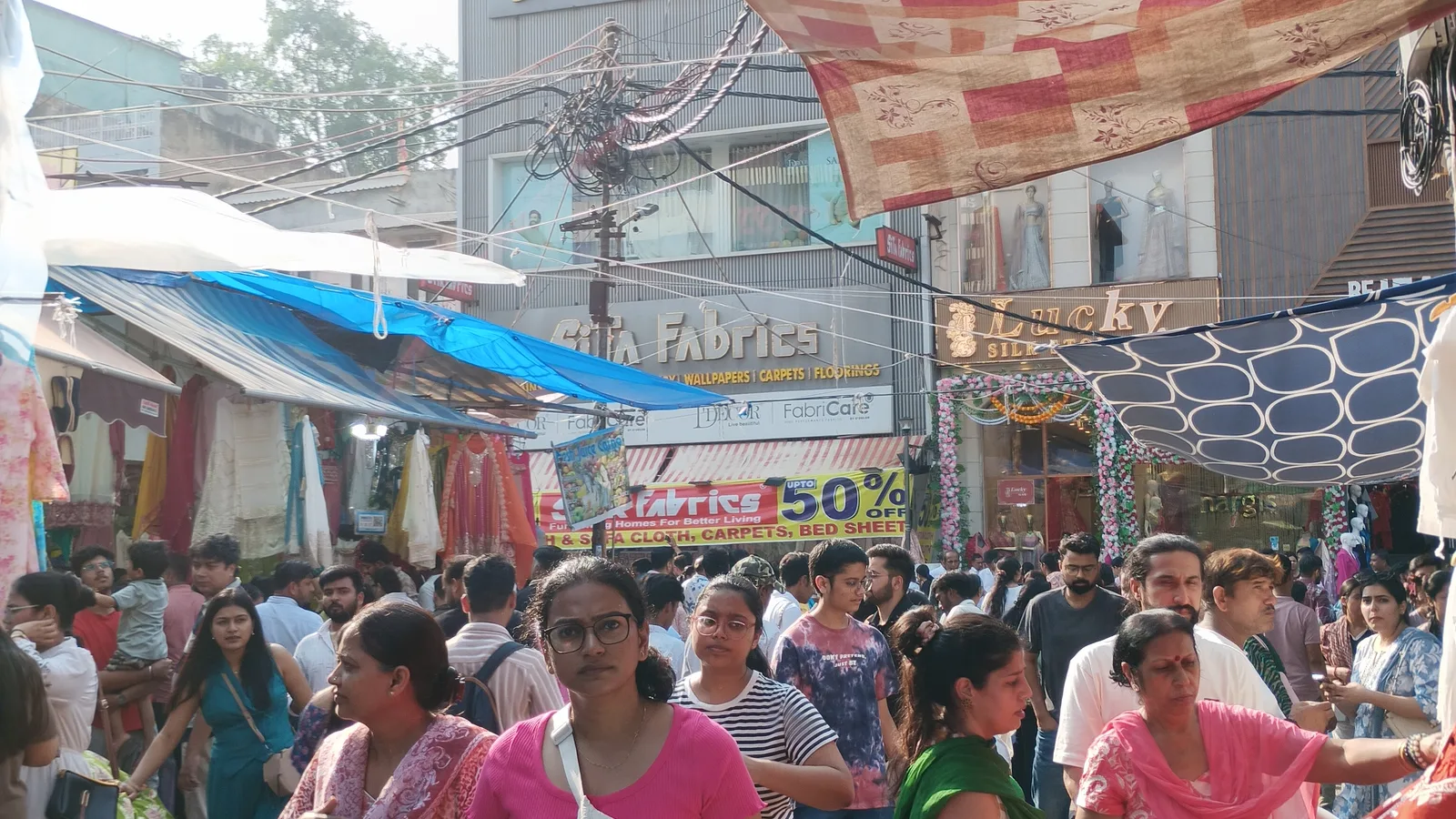
Yes — in hotels, restaurants in tourist districts, larger shops, chain pharmacies and for entry tickets at the major monuments. Contactless payment is the norm in big cities. You cannot pay by card in the bazaar, in a rickshaw, in a small eatery, at a street tea stall or in most temples.
Before you travel:
- enable foreign transactions in your banking app and raise the limits if they are low;
- bring two cards from different banks and carry them separately — one blocked or lost card then does not leave you without money;
- note your bank's card-blocking hotline somewhere other than the app, for instance in a travelling companion's phone.
A separate subject is UPI — India's QR-code payment system, which Indians use for literally everything. A visitor version, "UPI One World", can be set up at selected airports, but in practice it takes a good half hour and does not always work. Treat it as a curiosity, not a plan.
Rather not count every rupee? On our trips hotels, breakfasts, transport and guides are included, and the tour leader tells you on day one how much cash will cover the whole trip. See the programme of Pearls of North India.
Ask about a tripHow much cash you need per day
On an organised trip with hotels, breakfasts and transport included, your daily spending is lunches, dinners, water, tea, tips and small souvenirs. A realistic budget:
| Expense | Roughly |
|---|---|
| Lunch or dinner in a good restaurant | 400–900 ₹ (5–10 EUR) |
| Bottled water (1 l) | 20–40 ₹ |
| Masala chai from a street stall | 10–20 ₹ |
| Rickshaw across town | 100–300 ₹ |
| Tips per day (driver, guide, porters) | 300–500 ₹ |
| Souvenirs, spices, textiles | as you wish — from 200 ₹ for a packet of tea to several thousand for silk |
On our programmes entry tickets to monuments are not included and are paid on the spot — for a 12–16-day route allow roughly 80–120 EUR per person (8,000–12,000 rupees), depending on how many sites you visit; the Taj Mahal alone is about 1,300 rupees. The complete cost breakdown is in our guide to what a trip to India costs.
In total, 25–40 EUR a day in cash is a comfortable budget for someone who eats out, drinks a lot of tea and buys souvenirs without going wild. Over two weeks that is the 300–450 EUR mentioned above.
Tipping — who, how much and how
Tipping in India is customary and expected, but the amounts are small. For people working in tourism it is a meaningful part of their income, so it is better to tip a little and regularly than not at all. Rough conventions on a group trip:
- Driver — the group pools money at the end of the route, typically about 200–300 rupees per person per day of driving.
- Local guide — 100–200 rupees per person for a tour, more for a full day.
- Hotel porter — 50–100 rupees per suitcase.
- Restaurants — 5–10% of the bill unless a service charge has been added.
- Toilets, shoe-minding outside temples — 10–20 rupees.
The tour leader usually suggests a shared "tip kitty" at the start of the trip, from which the driver and guides are paid — much easier than counting coins at every farewell. That is also why it is worth breaking some money into 10, 20 and 50-rupee notes as soon as you exchange it; just ask at the bureau.
Haggling and shopping
In bazaars and small shops without price tags, haggling is part of the transaction — the seller opens at two or three times the real price and expects you to negotiate. Start at about half, settle at 60–70% of the opening price and finish with a smile. In shops with price tags, pharmacies, supermarkets and the government handicraft emporiums, prices are fixed.
Rickshaws: agree the fare before you get in or — in Delhi and Jaipur — book through an app (Uber, Ola), where the price is known in advance.
Tricks worth knowing about
- Torn or written-on notes given as change. Refuse — nobody else will accept them from you.
- "No change." A classic with rickshaws and small purchases. Hence the small notes.
- A shop "recommended" by a driver or tout. Prices there include a commission for whoever brought you. On our trips we do not go to such places.
- "Bargain" gemstones in Jaipur for resale at home. A well-known, decades-old scam.
- ATM skimmers. Rare, but it happens: if the card slot looks glued on or the keypad moves, use another machine.
- The note switch ("you gave me 100, not 500"). Hand money over clearly, face up, and say the amount out loud.
None of this is cause for nerves — in a group with a tour leader most of it will never touch you. It is simply worth knowing. We cover safety more broadly in is India safe to travel.
How to carry and store money
- Split your cash: some in the hotel safe, some in a pouch under your clothes, small notes in a pocket within reach.
- Do not produce a wad of notes in the street. Take out only the note you need.
- Cards separate from cash, and one card separate from the other.
- Photos of your passport, visa and card numbers on your phone and in the cloud, in case of loss.
- Insurance covering cash and luggage costs little extra and is real help in the event of theft.
Before you fly home, spend your rupees or change them back at the airport (you will need the exchange receipt). Keep a little for tea at the airport — there is no point carrying them home.
Frequently asked questions
Which currency should I bring to India?
Euros or US dollars in cash — new, undamaged notes, ideally in 50s and 100s — plus two payment cards with foreign transactions enabled. Rupees are hard to buy abroad at a sensible rate and are best obtained on arrival.
How much cash do I need for two weeks in India?
On an organised trip with hotels, breakfasts and transport included, 300–450 EUR in cash usually covers lunches, dinners, water, tips and souvenirs. Add entry tickets to monuments, roughly 80–120 EUR (8,000–12,000 rupees) for the whole route.
Can I pay by card in India?
In hotels, restaurants in tourist districts, larger shops and for tickets at the main monuments — yes. In the bazaar, in a rickshaw, in a small eatery and in temples — no. Cash is essential day to day.
Where is the best place to exchange money in India?
At the airport only a small amount for the first day, because the rate is 5–10% worse. The rest at a licensed exchange bureau in town (passport required) or at an ATM, choosing to be charged in rupees rather than your home currency.
How much should I tip in India?
Driver about 200–300 rupees per person per day, local guide 100–200 rupees per person, porter 50–100 rupees per suitcase, restaurants 5–10% of the bill. The amounts are small, but for tourism workers they are an important part of income.
Are ATMs in India safe?
Yes, if you use machines at bank branches, in hotels or shopping centres, during the day. Shield the keypad, decline conversion to your home currency, and expect a withdrawal limit of around 10,000 rupees and a fee of 200–500 rupees.