There are three ways to see India: entirely on your own, with local English-speaking guides in each city, or in a small group with a tour leader who travels with you from the first day to the last. Each makes sense — for different people and at different points in life. Below is an honest comparison, because a tour leader is not something everyone needs. It is, however, what most people who write to us before a first trip turn out to need.
The short answer
If you are a confident traveller with experience in Asia and you enjoy solving problems as they come, India on your own will be an adventure you will never forget. If any of those conditions is not met, a tour leader turns the trip from an exam into a journey. Not because India is dangerous (we cover that in is India safe to travel), but because it is logistically demanding: trains, domestic flights, queues at monuments, negotiations, and plans that change from one day to the next.
Three ways to see India — compared
Written from the point of view of someone travelling for the first time, aged 40 to 70, who does not want to spend a holiday fighting railway booking apps.
| What matters | Independent | Local guides only | Group with a tour leader |
|---|---|---|---|
| Language | English gets you far in cities; in smaller towns and at stations it often does not | English required — the guide translates from Hindi, in their city only | one person to ask for everything, from menus to paperwork |
| Logistics | train tickets, flights, hotels and transfers are yours to arrange | the guide works in one city; between cities you are on your own | private transport, hotels, entry tickets and connections are planned in advance |
| When things go wrong | a delayed train, fog, a strike — you solve it on the spot | the guide helps during working hours; afterwards you are alone | the tour leader reshuffles the day, calls the operator, arranges replacement transport |
| Health | you find a doctor yourself | the guide can point you to a clinic | the tour leader knows private clinics along the route and goes with you |
| Cost | potentially the lowest, with a real risk of overpaying on the ground | medium — a licensed guide is typically 30–60 EUR a day | fixed and known in advance; tour leader and guides included |
| Flexibility | total | high | limited by the programme — in exchange for peace of mind |
Guide costs are indicative — they depend on the city, the season and whether the guide is licensed. On our programmes local guides are included in the price.
What a tour leader does every day
The phrase "tour leader" sometimes conjures up someone waving a flag at the airport. In India a tour leader is the person who is with you from breakfast to dinner for two weeks. Concretely:
- Airport and transfers. Meets the group on landing, steers everyone through immigration, keeps an eye on luggage and gets people onto the right bus. The first hour in Delhi is often the most overwhelming — and that is precisely when a tour leader is most needed.
- Hotels. Check-in, rooms, a broken air conditioner, hot water, breakfast times. You get your key; everything else is handled by someone who talks to reception every day.
- Sightseeing. The local guide tells the history; the tour leader adds the context — why shoes come off in a temple, what the dot on the forehead means, why the cow is lying in the middle of the road.
- Food. Knows where to eat safely and how to ask for a milder version of a dish. Passes dietary needs to restaurants before the group arrives.
- Money and shopping. Helps you change currency at a fair rate, warns you off "tourist" shops, and suggests where to buy silk or spices without being overcharged.
- Pace. Notices when the group is tired and moves an item to a calmer hour. No timetable does that.
- Emergencies. A lost passport, an illness, a delayed train — the tour leader has the numbers for the operator, the clinic and the embassy. You have the number for the tour leader.
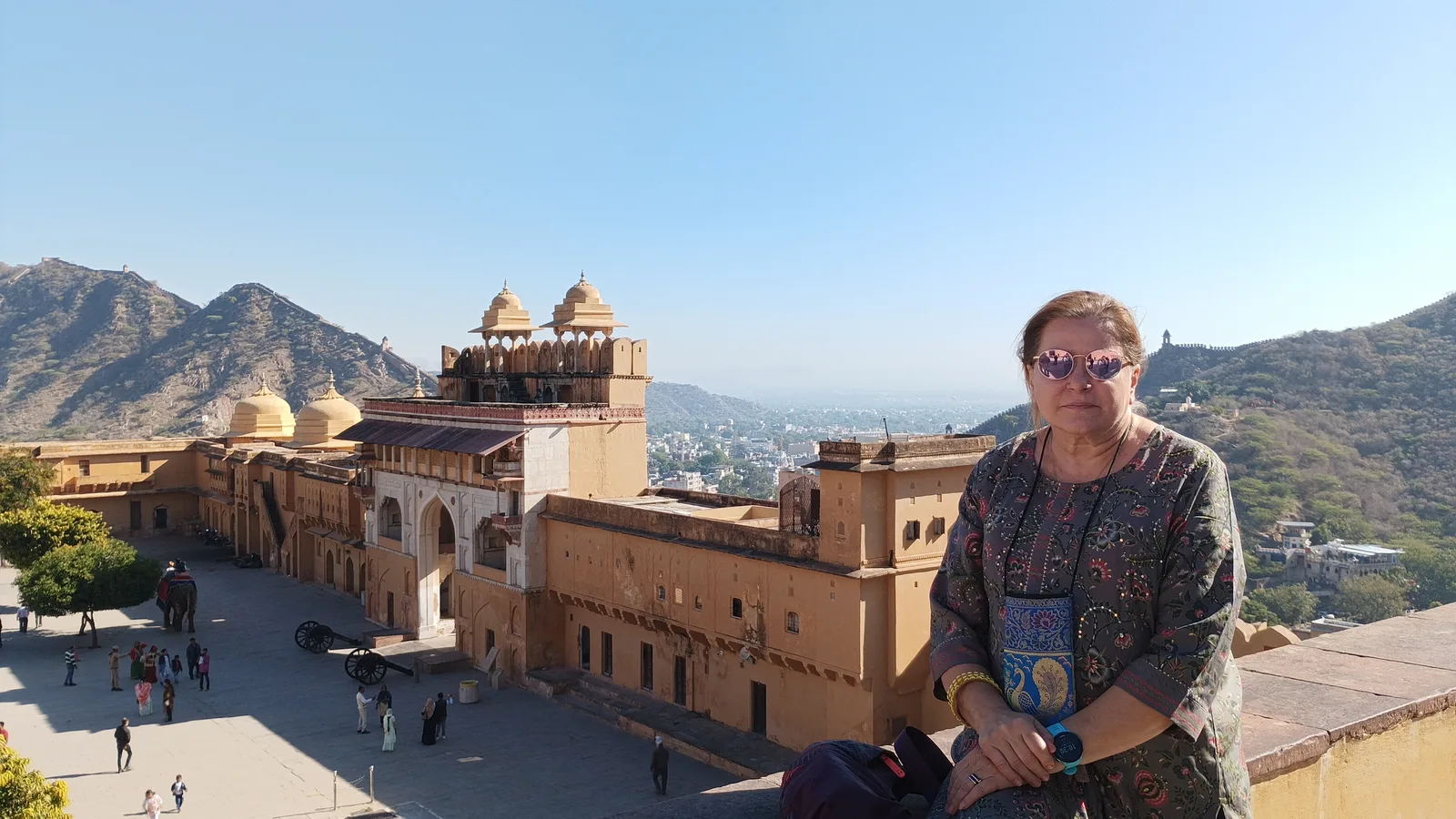
Tour leader versus local guide — not the same thing
At most of India's major monuments, groups are shown around by licensed local guides. These are people who know Amber Fort or the Taj Mahal in detail, but they work in one city and speak English (sometimes German, French or Spanish as well).
A tour leader does not replace the guide but completes the picture: travelling the whole route with the group, filling in context, and keeping the trip coherent from start to finish. On a well-run trip you have both — and that is how every programme we coordinate with our partner, the Indian operator Abyss Tours, is built.
Want to see how it works in practice? On Pearls of North India the tour leader is with the group for all 12 days — from Delhi through Jaipur and the Taj Mahal to Varanasi. We will send you the full day-by-day plan.
Ask about a tripWhen a tour leader makes the biggest difference
In our experience there are four situations in which a tour leader stops being a convenience and becomes the condition for a good trip:
- You are not confident in English — or the group is not. India speaks a dozen major languages, and English is the language of officials, hotels and guides. Where it runs out, a single person to turn to removes the stress entirely.
- It is your first time. The first days in India are intense: noise, crowds, smells, begging, strangers asking for a selfie. Someone who has seen it dozens of times helps you cross that threshold calmly.
- You are over 60, or travelling with someone who is. More questions about pace, stairs, food and doctors. The tour leader is there so that those questions have answers before they become problems.
- Something goes wrong. Fog closes Varanasi airport, the train from Agra runs four hours late, someone in the group ends up in a clinic. On your own, those are the worst hours of the holiday. With a tour leader, they become a story to tell at home.
What it costs and what is included
A common myth: travelling with a tour leader is "expensive". In practice the gap between an independent trip at a comparable standard (3–4-star hotels, private transport, guides at the monuments) and an organised one is smaller than people expect, and sometimes there is none — because the operator buys hotels and transport at group rates that an individual traveller never sees.
For reference, current prices of our trips with a tour leader, excluding international flights:
- Pearls of North India — 12 days, from 900 EUR per person in 3-star hotels or 1,150 EUR in 4-star
- Colourful India — 15 days with tiger safaris, 1,550 EUR
- Golden Cities of Rajasthan — 16 days with a night in the desert, 1,825 EUR
- Kashmir: the Golden Valley — 12 days, 1,060 EUR
Included: hotels with breakfast, private transport, domestic flights where the programme has them, local guides and the tour leader. Not included: international flights, visa, insurance, entry tickets, meals outside the programme and tips. The full breakdown is in our guide to what a trip to India costs.
How to check an operator before you pay
A tour leader is only as good as the operator behind them. Before you pay a deposit, ask three questions — of any company, including us:
- Who is the tour operator? In our case the answer is: Abyss Tours of New Delhi, certified by India's Ministry of Tourism. Lotus Tours & Travel coordinates the trip, markets it and provides the tour leader — the partner's certificate is here.
- Is the tour leader included, and for the whole trip? Some offers describe "support" that turns out to be a phone number in another country. Ask directly.
- Can I talk to someone who has been? Reviews from our travellers are on our Facebook page, and reviews of Abyss Tours on TripAdvisor. A genuine operator has no problem with that.
If you still have doubts after those three questions — call. It commits you to nothing, and often explains more than the longest article.
Frequently asked questions
Do I need to speak English to travel in India with a tour leader?
Not fluently. The tour leader deals with guides, menus, airport announcements and hotel conversations for the whole group. A few phrases help with small things — buying water or a souvenir — but they are not a condition of a good trip.
What is the difference between a tour leader and a guide?
A tour leader travels with the group for the whole trip and is responsible for logistics, context and safety. A local guide works in one city, shows you the monuments and speaks English. On a well-organised trip you have both.
Is the tour leader included in the price?
Yes. On our programmes the tour leader, local guides, hotels with breakfast, private transport and domestic flights are included. You pay separately for international flights, visa, insurance, entry tickets and meals outside the programme.
Does a tour leader travel with every group?
A tour leader accompanies groups of at least 10 people in person. Smaller groups and private trips have continuous remote support from us and round-the-clock support from the Abyss Tours team in India.
Is a trip with a tour leader much more expensive than going alone?
At a comparable standard of hotels and transport the difference is small, and sometimes there is none. The operator buys hotels and transport at group rates that an individual traveller cannot get. Real savings only come from travelling at a much lower standard.
Who operates Lotus Tours & Travel trips?
The tour operator is Abyss Tours of New Delhi, certified by India's Ministry of Tourism. Lotus Tours & Travel coordinates the trip, markets it and provides the tour leader and traveller support; it does not accept payments from clients.